


introduction
Many people encounter these questions when using paperclips:
Why are some easy to rust, while others are more durable and less prone to deformation?
The fundamental reason for these differences lies in the materials.
Despite their seemingly simple structure, there are significant differences in materials and surface treatments, all of which affect their durability and user experience.
So, what are paper clips made of, and what are the differences between different materials?
Understanding these factors can help you make more appropriate choices in your daily use or when purchasing paperclips.

Paperclips: Material, Types, And Sizes
When choosing paperclips, many people often focus only on appearance or price, neglecting the differences in material, shape, and size. In reality, these factors directly affect the paperclip’s durability, clamping strength, and user experience.
Therefore, while understanding what paper clips are made of, it’s also necessary to consider their common shapes and sizes to make a more appropriate choice for different usage scenarios.
1. Common Materials
Paperclips are usually made of metal wire. Different materials not only affect appearance but also directly determine their durability, elasticity, and susceptibility to rusting.
1.1 Steel
This is the most basic and widely used paperclip material.
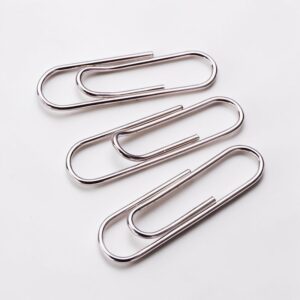
- Low cost, suitable for mass production and procurement.
- Moderate strength, sufficient for daily document organization needs.
- Good processing performance, easy to quickly form, and high production efficiency.
- Suitable for daily office use in dry environments, especially for cost-sensitive and frequently used scenarios.
⚠️ It is prone to oxidation in humid environments due to contact with air and moisture, leading to rust. Additionally, it is susceptible to deformation after repeated use or when clamping thick documents, thereby affecting its clamping strength.
1.2 Galvanized Steel
A zinc coating is applied to the surface of ordinary steel through electroplating or hot-dip galvanizing, thereby improving overall performance.
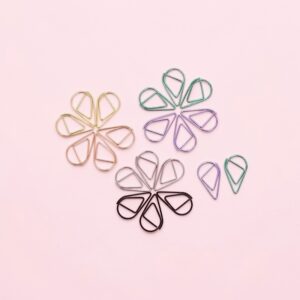
- Improved rust resistance and greater stability in humid environments.
- Extended service life with reduced oxidation.
- Retains steel strength while enhancing durability.
- Suitable for daily office, storage environments, or relatively humid conditions, especially suitable for scenarios that require a certain level of durability but also need to control costs.
Although galvanized steel paperclips have a certain degree of rust resistance, the coating may fail after long-term use or wear, thus affecting their durability.
1.3 Stainless Steel
It belongs to a higher quality paperclip material, usually containing alloying elements such as chromium, which gives it stronger corrosion resistance.

- Strong corrosion resistance, not easy to rust, suitable for long-term use.
- More stable elasticity, maintaining clamping force even after repeated use.
- Smoother surface, less likely to scratch paper during use.
- Suitable for long-term office use, high-end office environments, or scenarios with high requirements for product quality and user experience.
⚠️ The cost is relatively high, making it unsuitable for price -sensitive scenarios involving large-volume, one-time use.
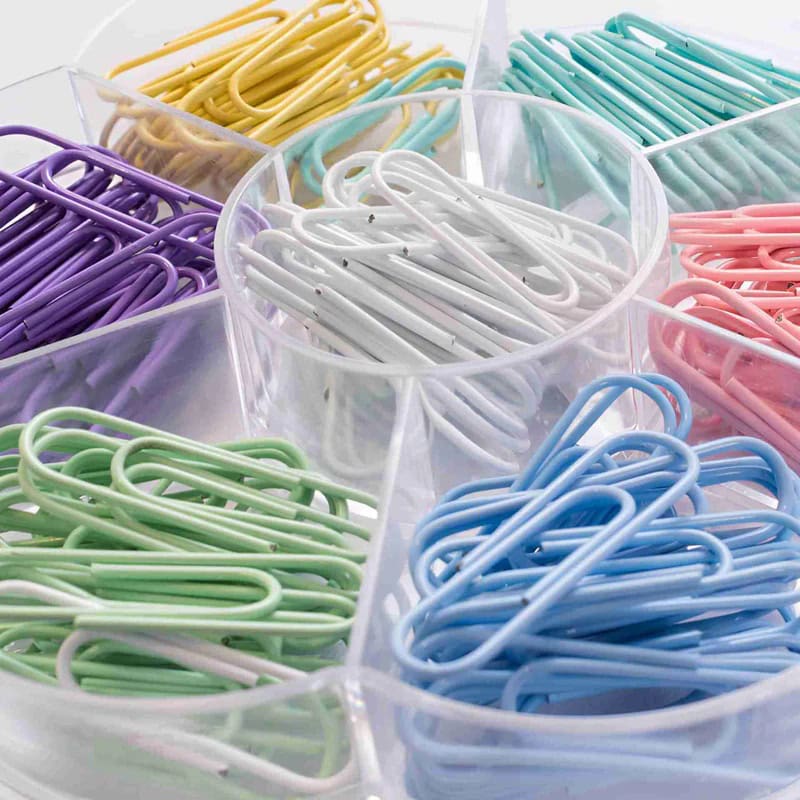
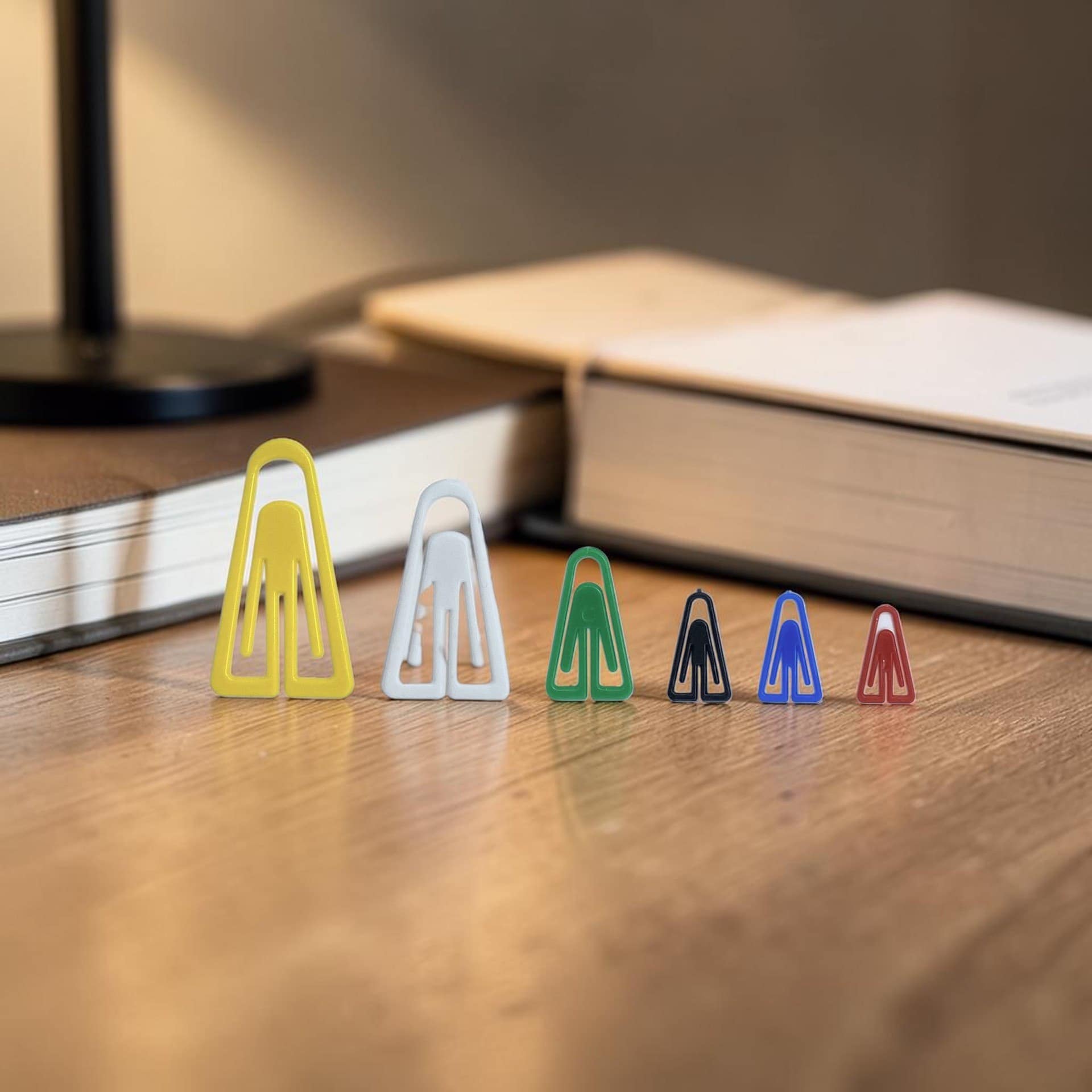
1.4 Plastic-Coated
Adding a plastic or PVC coating to the outer layer of a metal paperclip can improve the user experience while maintaining the strength of the metal.

- Increased friction for a more stable grip and less slippage.
- Reduces scratches on paper and protects document edges.
- Color-coded sorting improves organizational efficiency.
- Widely used for document classification, school use, and brand customization (such as corporate color differentiation, promotional purposes, etc.).
⚠️ The plastic coating may wear off or peel off after long-term use or friction, affecting its appearance and feel.
If you’re also interested in the materials used in similar office supplies, you can read “What Are Staples Made Of? The Science Behind the Staple“.
2. Common Shapes
The shape of a paperclip directly affects its clamping force, durability, feel, and protection of paper. Different shapes and structures are available to suit various binding needs, from daily office work to document filing and gift display, each offering an optimal choice.
2.1 Gem Type (Classic)
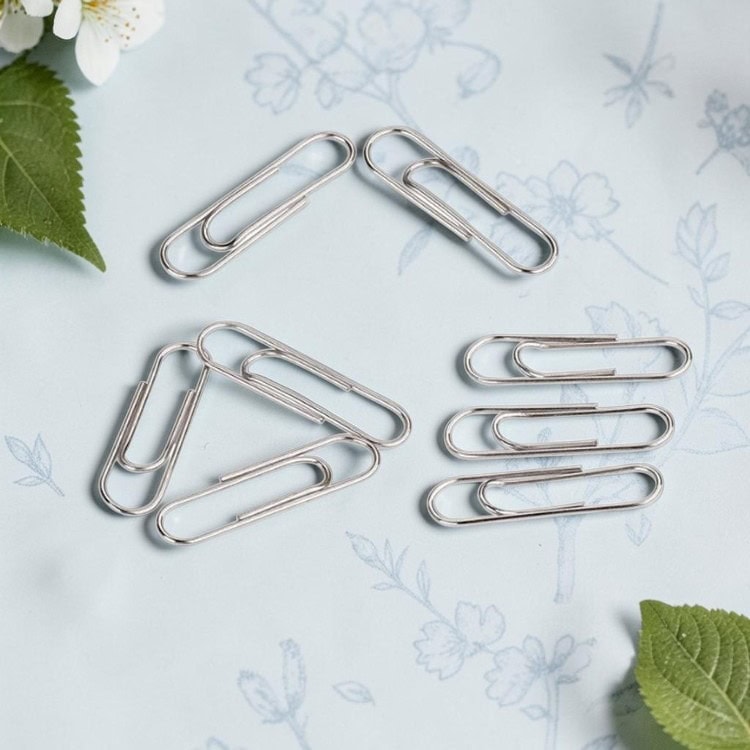
This is currently the most popular and highest-volume standard paperclip design.
✨ Features:
- Featuring a symmetrical double-layer curved structure, the lines are smooth and fluid.
- It distributes force evenly during clamping, preventing scratches or punctures to paper edges.
- It is easy to pick up and put down, and can be disassembled and reused multiple times.
- It has moderate elasticity, preventing excessive rebound or insufficient clamping force.
🌍 Applicable scenarios:
General scenarios such as daily office documents, student assignments, invoice organization, and temporary
binding make it the preferred style for most office scenarios.
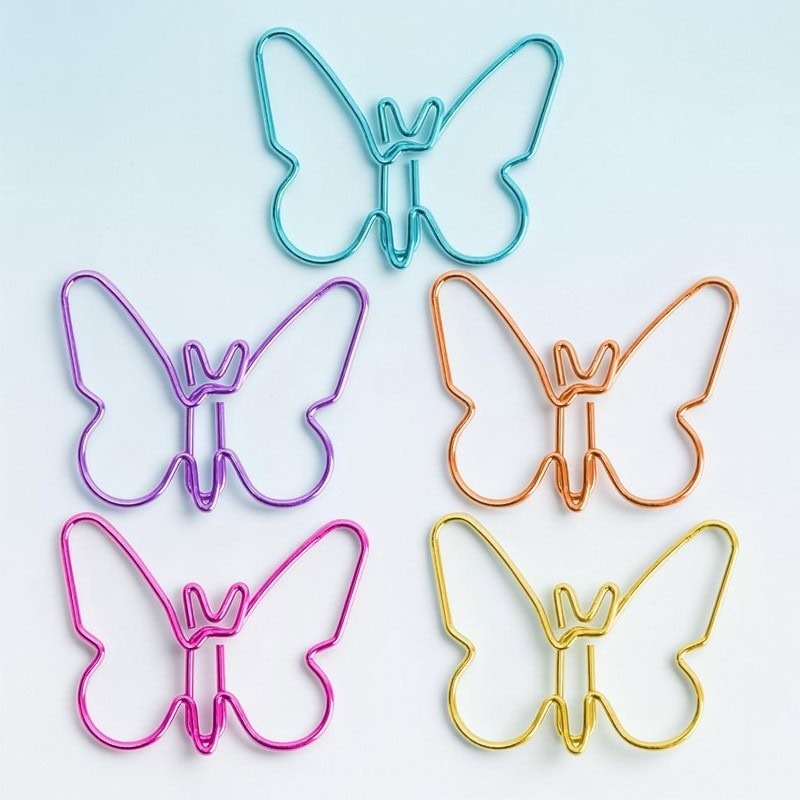
2.2 Butterfly (Extended) Type
The outer curvature has been optimized based on the classic Gem shape, making the overall shape more graceful and resembling butterfly wings.
✨ Features:
- The outer support arc is larger, providing a wider contact area with the paper.
- The clamping is more secure, preventing thick documents from loosening or slipping.
- The clamping force is stronger than the classic model, suitable for stacks of thicker documents.
- It’s easier to grip and more comfortable to use.
🌍 Applicable scenarios:
Thick documents, contract pages, reports, ledgers, and other documents that need to be securely fixed and not easily scattered.
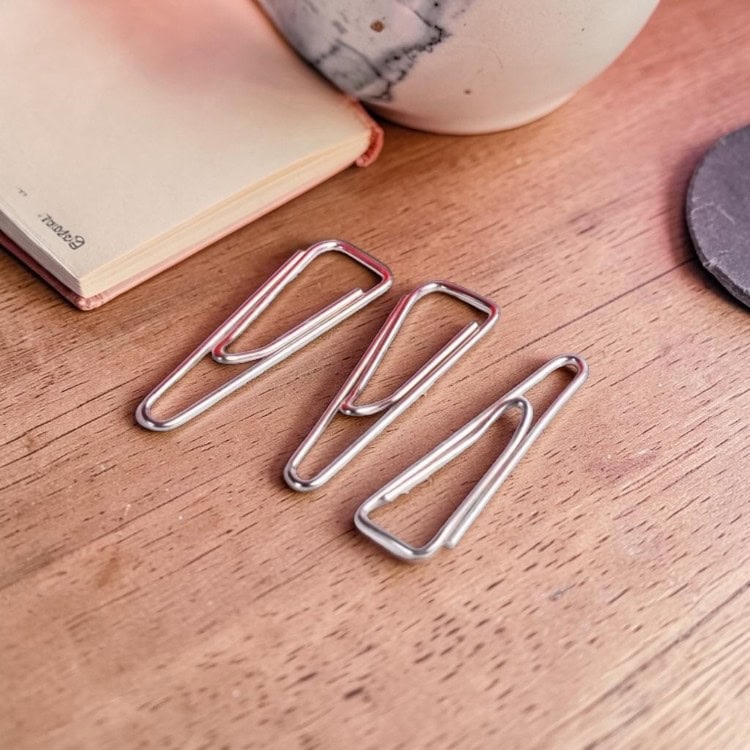
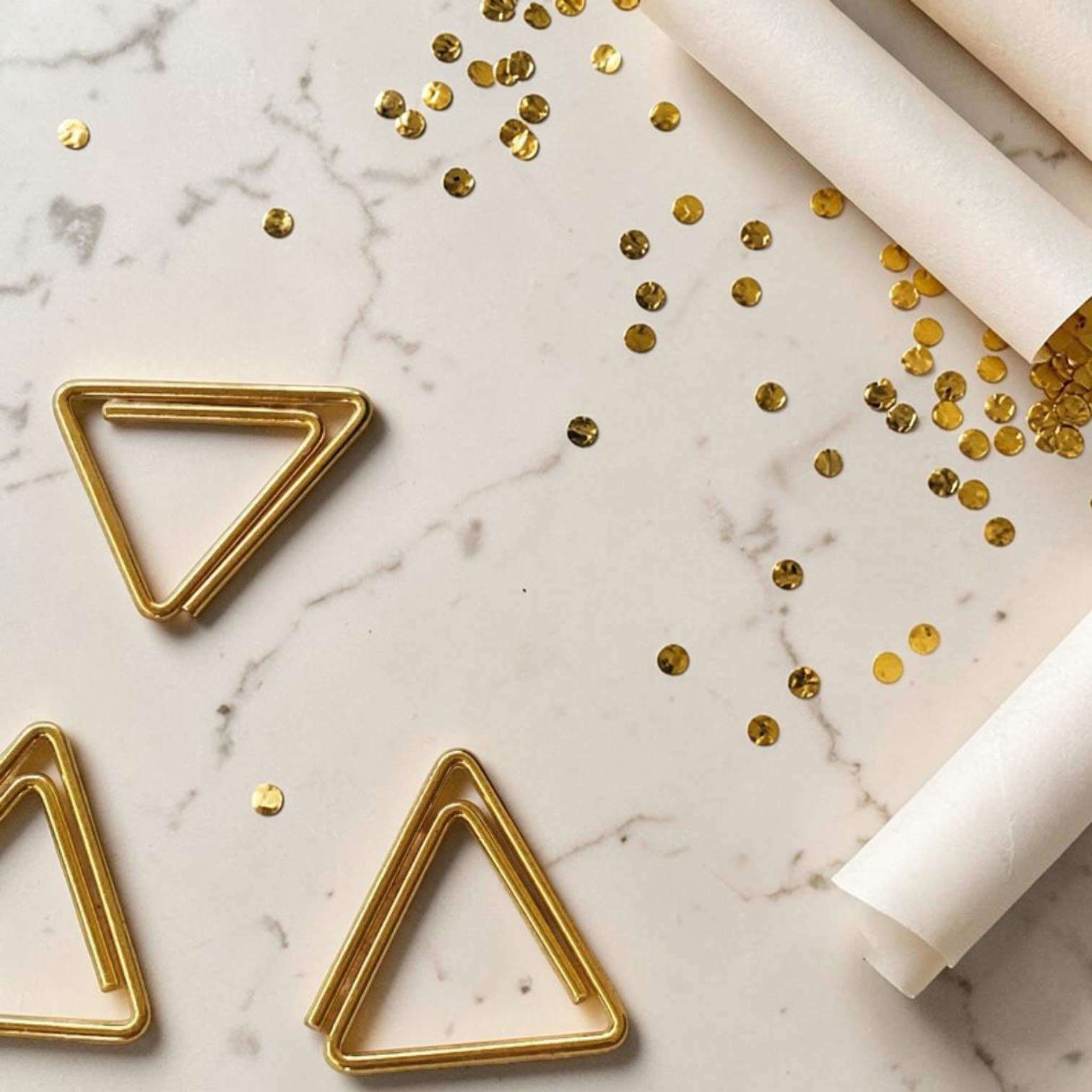
2.3 Triangular Type
It adopts a triangular force-bearing structure, which is different from the traditional circular arc shape.
✨ Features:
- Three-point support distributes pressure more evenly.
- Resists slipping during clamping, making it particularly suitable for smooth paper.
- Features a more stable structure, minimizing the risk of tipping or twisting.
- Inflicts minimal indentation on paper edges, providing superior protection.
🌍 Applicable scenarios:
Suitable for smooth printing paper, photos, cards, thin notebooks, and other situations where strict prevention of paper slippage or misalignment is required.
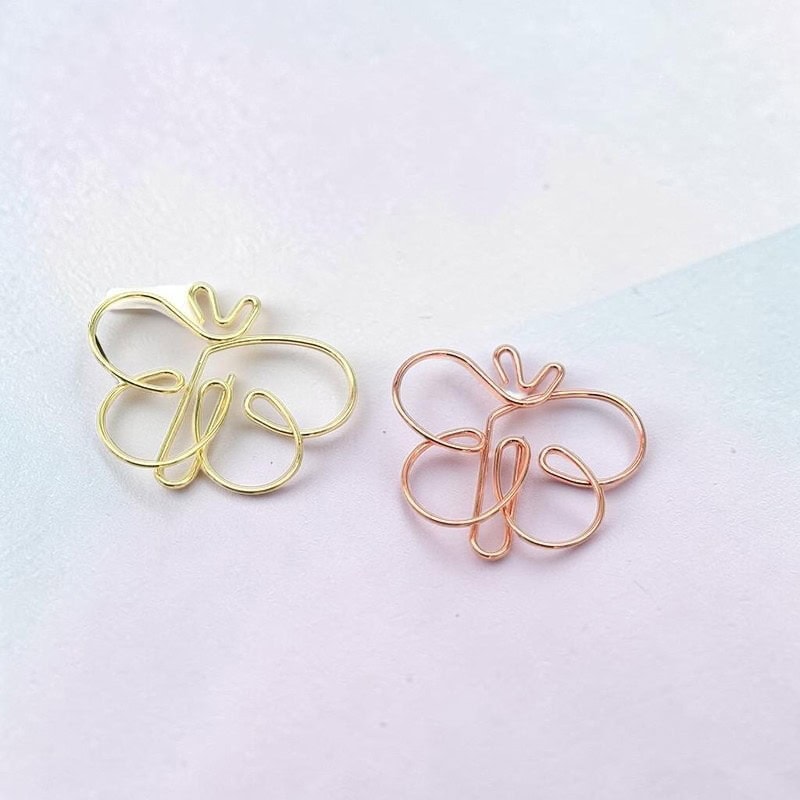
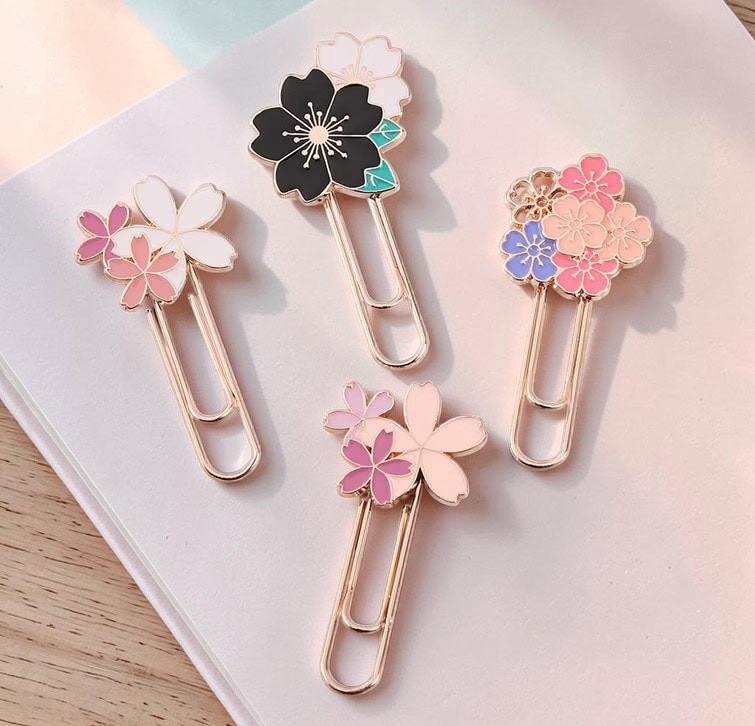
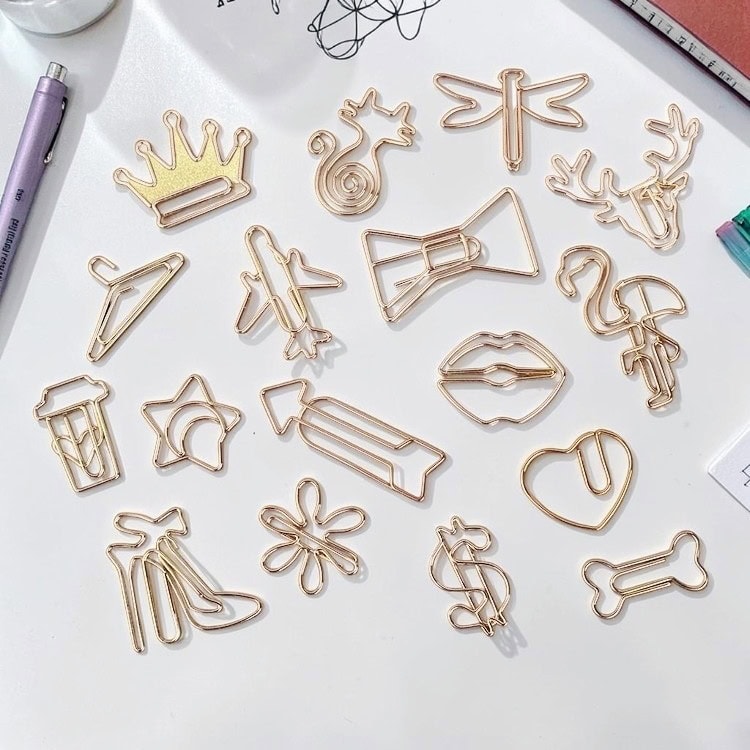
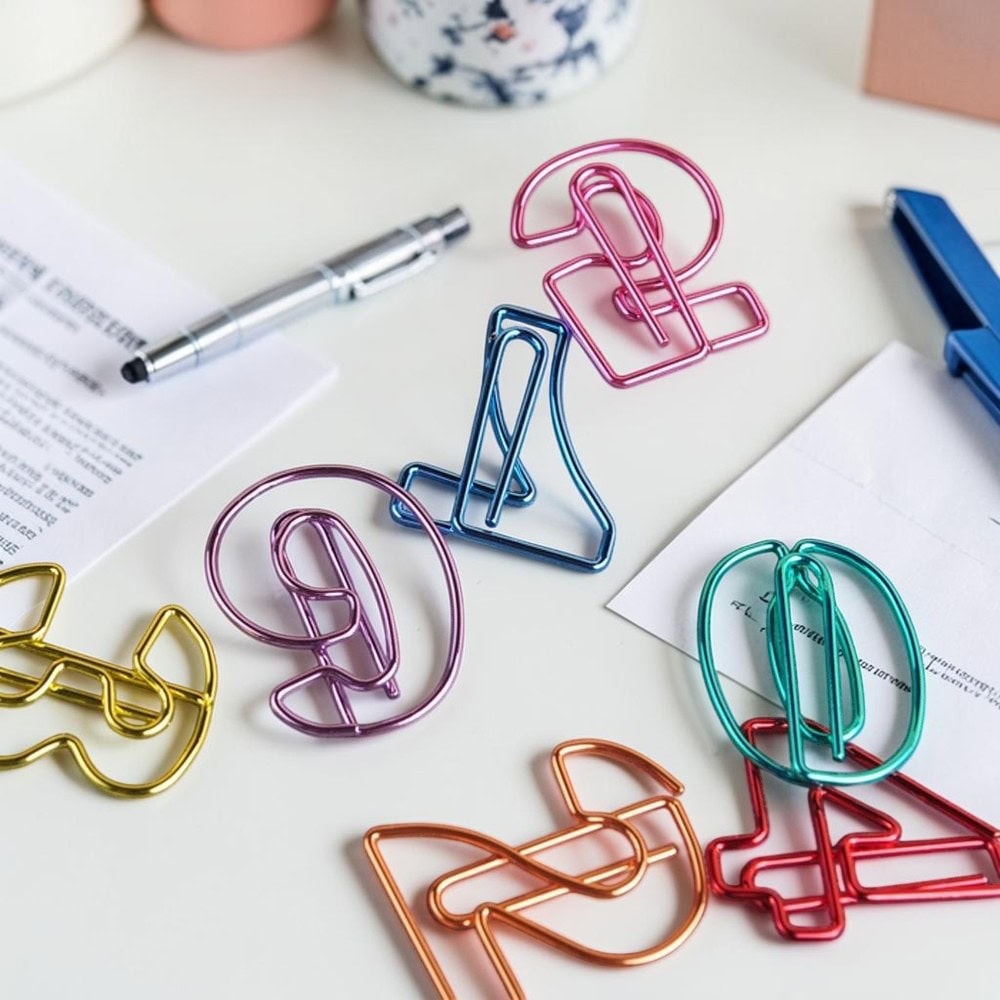
2.4 Creative Type
It focuses on appearance design while maintaining structural integrity, combining practicality and aesthetics.
✨ Features:
- A wide variety of shapes and designs are available, with customizable options.
- Flexible color combinations facilitate document organization and visual identification.
- Brand logos and slogans can be printed on the designs, making them suitable for brand displays.
- Most structures are based on classic designs, ensuring basic functionality.
🌍 Applicable scenarios:
Corporate gifts, holiday promotions, cultural and creative products, promotional items, themed events, document categorization and decoration, and customized brand promotion.
3. Common Sizes
Paperclips are typically measured in length (mm). Different sizes not only affect the number of clips they can hold but also directly impact stability, elasticity, and efficiency.

3.1 Small Size (Approx 25mm)
- Suitable for: 5-10 sheets of paper
- Features: Small size, flexible use, takes up little space.
- Scenarios: Sticky notes, small documents, temporary organization.
- Advantages: Suitable for lightweight use, easy to carry, and suitable for quickly organizing small batches of documents.
- Disadvantages: Limited clamping capacity; may deform or slip if exceeded.

3.2 Medium Size (Approx 28-35mm)
- Suitable for: 10-20 sheets of paper
- Features: Versatile, stable clamping, and balanced feel.Scenarios: Daily office work, student assignments, document sorting.
- Advantages: Achieves the best balance between clamping force, stability, and flexibility.
- Key Points: This is the most widely used and adaptable size on the market.

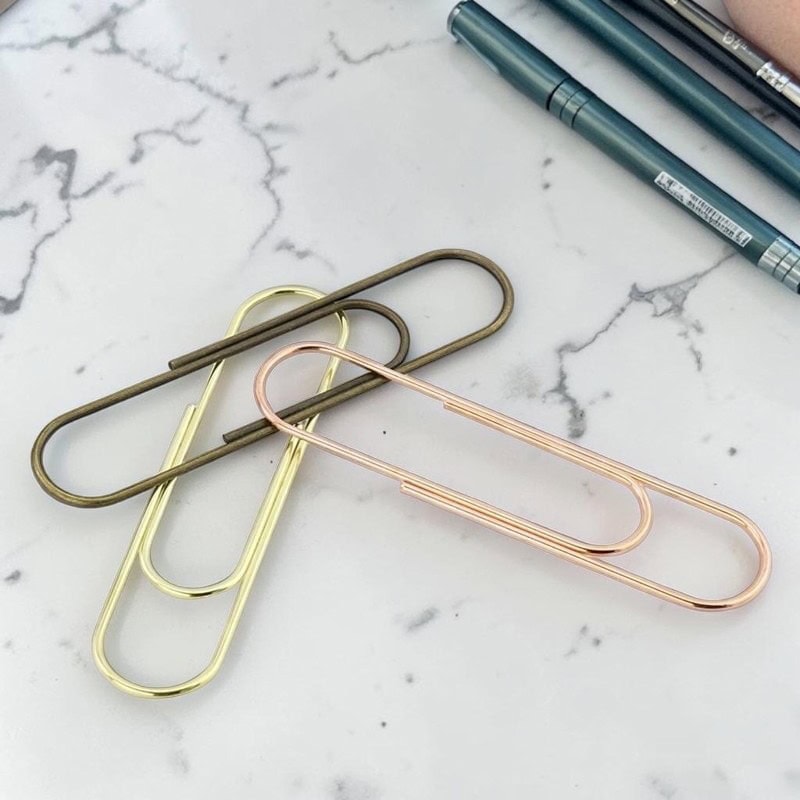
3.3 Large Size (Approx 50mm And Above)
- Suitable for: 20 or more documents.
- Features: High capacity, suitable for thicker documents.
- Scenarios: Document archiving, data organization, and long-term storage.
- Advantages: Stably holds thick documents, preventing slippage.
- Disadvantages: Large size, not suitable for frequent disassembly or meticulous organization.
✅ Tips For Using
| Key Takeaways | Practical Advice |
| Small needle clip thick paper → easily deformed | Select size based on paper quantity |
| Large needle clip, thin paper → easy to fall off | Thin paper selected/small size |
| Avoid repeated bending → loss of elasticity | Handle with care |
| Single size → low efficiency | Mix and match, categorize and manage |
It is this combination of different materials, shapes, and sizes that allows paperclips to adapt to a variety of usage scenarios, ensuring both clamping effect and durability and practicality, making them an efficient and thoughtful little tool in daily life.
How Are Paperclips Made?
Although paperclips have a simple structure, their production process is highly automated, and the control of materials and processes directly affects the product’s elasticity, stability, and service life.

1. Raw Material Selection

Production typically begins with metal wire:
- Common materials: low-carbon steel wire, stainless steel wire.
- Good ductility and resilience are required.
- Wire diameter (thickness) affects clamping force and strength.
🎯 The quality of the material determines whether a paperclip is prone to deformation or breakage.
2. Automatic Bending And Forming

This is the core manufacturing process:
- The metal wire is continuously bent using a high-speed automated forming machine.
- The curvature and structure are precisely controlled (e.g., a double-layered Gem structure).
- Large-scale continuous production is possible.
🎯 Forming precision affects clamping stability and the machine’s feel.
3. Surface Treatment

To improve durability and appearance, surface treatments are typically applied:
- Electroplating (zinc/nickel plating): Enhances rust resistance.
- PVC coating: Improves grip and visual appeal.
🎯 Poor surface treatment quality can lead to paint peeling.
rusting, or a rough feel.
4. Quality Inspection And Packaging

Basic inspections are required after production:
- Dimensional consistency.
- Elasticity stability.
- Surface is smooth and burr-free.
🎯 Common packaging methods: bulk or boxed.
From raw material selection to molding, surface treatment, and then to rigorous quality inspection and packaging, every process determines the precision, toughness, and lifespan of the paperclip.
Standardized production processes ensure that this small paperclip is both stable and reliable, meeting the needs of large-scale, high-quality daily use.
Common Uses Of Paperclips
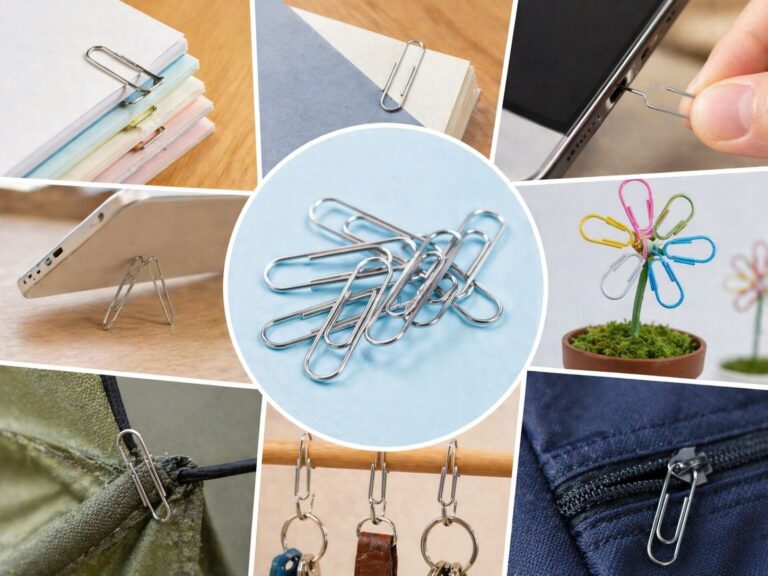
Originally designed for document organization, paperclips are now widely used in various scenarios, such as office work, study, daily life, and creative crafts, thanks to their simple structure and reusability, etc.
1. Office Use
This is the most widespread use of paperclips, making them virtually irreplaceable in daily office work.


👍 Features:
- Temporary document organization: No need for punching or binding, easy to disassemble and adjust at any time.
- Categorizing different documents: Use colored paperclips to distinguish different types of documents quickly.
- Securing important documents: Keep paper documents such as contracts, invoices, and reports neat and organized.
🌟 Advantages: Flexible, reusable, and will not cause permanent damage to paper; suitable for documents that require frequent adjustment and viewing.
📘 Additional notes: Compared to staplers or clips, paperclips are more suitable for “temporary organization” and “lightweight categorization,” keeping documents neat without hindering subsequent modifications and disassembly.
In actual office work, paperclips are often used in conjunction with other document organization tools, such as
2. School And Daily Use
Paperclips are also very practical in study and daily life. Because they are lightweight and reusable, they are an ideal alternative to staples and glue.


👍 Features:
- As a bookmark to mark your reading position, it won’t damage the pages and is easy to move around.
- Organizing notes or exam papers: Quickly categorize different subjects or content for easy review.
- Securing sticky notes or small cards: Keeps materials neat and prevents loss.
🌟 Advantages: Simple to use, reusable, leaves no trace, especially suitable for study materials that need frequent adjustment or disassembly.
📘 Additional notes: In these scenarios, small paperclips (approximately 25mm) are lighter and more flexible, while colored paperclips can help with quick categorization, improving study and organization efficiency.
If you frequently organize your study materials, you can also use the following tools to improve efficiency: 10 Amazing Tips For Using Sticky Notes.
3. Temporary Tool Uses
In some temporary or emergencies, paperclips can serve as a simple and practical tool, acting as an “emergency
substitute.’


👍 Features:
- Replacement zipper pull: Can be used temporarily as a pull tab when a zipper is damaged or missing.
- Open card slot (e.g., SIM card slot): Can be used as a SIM card ejector tool when straightened.
- Temporarily secure items: Such as organizing wires, securing small parts, etc.
🌟 Advantages: The material has a certain degree of elasticity and strength, making it easy to bend into different shapes, meeting basic mechanical assistance needs.
📘 Additional notes: For these applications, ordinary steel or stainless steel paperclips are more suitable (higher strength). In contrast, plastic-coated paperclips may have their coating damaged after bending.
⚠️ Caution: Avoid frequent or large-amplitude bending to prevent metal fatigue and breakage, affecting safe use.
4. DIY And Creative Uses
Paperclips are often used in various DIY and creative projects because of their bendable, fixable, and reusable properties.


👍 Features:
- Simple Phone Stand: A support structure can be easily formed by bending, making it convenient for watching videos.
- Handmade Models or Connectors: Used as a small structural fixing tool for model making or handicrafts.
- Decorative and Creative Omaments: Can be bent into different shapes for personalized design or decorative purposes.
🌟 Advantages: Simple structure yet highly malleable, capable of rapid deformation while maintaining a certain strength, suitable for lightweight creative applications.
📘 Additional Notes: In DIY scenarios, ordinary steel or stainless steel paperclips are more suitable (easier to shape and less prone to breakage), while colored coated versions are more suitable for creative designs that emphasize visual effects.
⚠️ Caution: Avoid repeatedly bending the same spot; otherwise, it can easily cause metal fatigue and affect structural stability.
5. Teaching And Experimental Purposes
In teaching or basic experiments, paperclips are often used as low-cost, readily available auxiliary materials, suitable for demonstrating basic physics and scientific principles.


👍 Features:
- Simple conductivity experiment: Connect a battery and a light bulb to demonstrate the principle of current conduction.
- Magnetic test: Determine if it is an iron-based material and observe changes in magnetism.
- Small measuring or demonstration tool: Can be used as a temporary pointer scale reference, or structural demonstration component.
🌟 Advantages: Easy to obtain, simple to operate, allows for quick completion of basic experiments or classroom demonstrations, suitable for introductory teaching.
📘 Additional notes: In experimental scenarios, uncoated metal paperclips are more suitable (better conductivity), while plastic-coated ones will affect conductivity.
⚠️ Caution: Avoid prolonged energization or exposure to high temperatures during conductivity experiments to ensure safe use.
From basic document organization to emergency use, and then to creative crafts and teaching experiments, paperclips have long transcended their status as a simple stationery item, becoming a versatile and indispensable helper in life, study, and work.
FAQ
What are paperclips made of?
Most paperclips are made of steel, galvanized steel, or stainless steel, and some also have a plastic coating on the surface.
Why do paperclips rust?
Ordinary steel paperclips are prone to oxidation and rusting in humid environments due to contact with air and moisture.
For rust prevention, galvanized or stainless steel materials are recommended.
Which type of paperclip is more durable?
Generally speaking, Stainless steel is better than galvanized steel, and galvanized steel is better than plain steel. Stainless steel paperclips are less prone to rust and deformation, making them suitable for long-term use.
Are paperclips easily deformed?
Paperclips of lower quality or improper size are prone to deformation.
Holding too much paper or repeatedly bending it can also affect its structural stability.
Paper clips may seem simple, but their materials, shapes, and sizes all play a key role in performance and durability.
Understanding what paper clips are made of helps you choose the right option for different needs—whether for everyday office use, organization, or specialized applications.
By selecting the appropriate material and size, you can improve efficiency, protect your documents, and ensure longer-lasting use.