


introduction
Many people wonder how do you get sticker glue off glass after removing labels or stickers, because sticky residue often remains on the surface.
This affects transparency and easily attracts dust, and causes fogging.
It is commonly found on glass bottles, windows, display cases, mirrors, car windows, or glass packaging.
This residue cannot always be wiped off with water.
The longer the sticker has been on, or after exposure to sunlight, high temperatures, or humid environments, the adhesive layer may harden and become stickier, making it more difficult to remove.
Scraping directly with a metal blade may scratch the glass; using alcohol, nail polish remover, or strong adhesive removers may damage the coating, film, printing, or decorative glass.
From Honeyoung’s perspective as a stationery and label manufacturer, the difficulty of removing adhesive residue depends not only on the cleaning method but also on factors such as adhesive type, sticker material, application time, and glass surface condition.
Therefore, when removing adhesive from glass stickers, it is recommended to first determine the type of glass and the extent of the residue, and then begin with gentle methods.

Preparation and assessment before cleaning
Before starting the cleaning process, confirm the glass type, prepare the tools, and choose the appropriate method based on the amount of residual adhesive. Ordinary glass and specially treated glass have different tolerances; incorrect use of alcohol, nail polish remover, or strong adhesive removers may damage the film, coating, or printed patterns.
1. Confirm glass type
| Glass Type | Precautions | Suggested Practices |
| Ordinary window glass | Generally quite resistant to cleaning | First, use hot soapy water and a plastic scraper |
| Glass bottles or glass jars | May contain printed patterns | Avoid the printed area and prioritize soaking. |
| Automotive glass | There may be a heat-insulating film or tint applied. | Avoid strong solvents and prolonged high temperatures. |
| Coated glass | Surface coatings may be more sensitive | Test the cleaning agent on a small area first |
| Printed decorative glass | The pattern may be affected by alcohol or solvents | Avoid wiping the printed area directly. |
| Mirror glass | The edges should not be in contact with liquid for extended periods | Avoid soaking the edges of the mirror |
Standard glass can generally withstand hot soapy water, white vinegar, and small amounts of alcohol, but coated, filmed, printed, or decorative glass requires greater caution. Before using alcohol, nail polish remover, or specialized adhesive removers, it is best to test the product on an inconspicuous area first.
2. Preparing Tools and Materials
📌 Cleaning up minor adhesive residue usually only requires a few basic tools:
- Sponge
- Paper towels
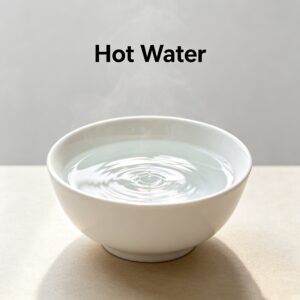
- A bowl of hot water
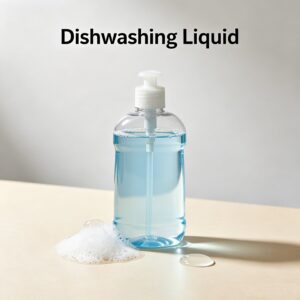
- Dish soap or mild soap
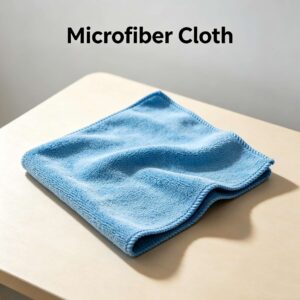
- Microfiber cloth
- Plastic scraper or old bank card
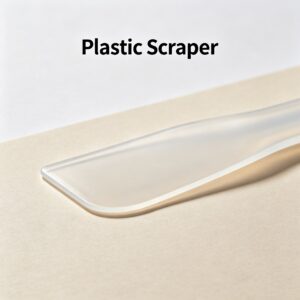
📌 If the adhesive residue is stubborn, you can also prepare:
- White vinegar
- Isopropyl alcohol or alcohol
- Cooking oil or olive oil
- Baking soda
- Acetone-free nail polish remover
- Hair dryer
- Ice pack
- Special adhesive remover
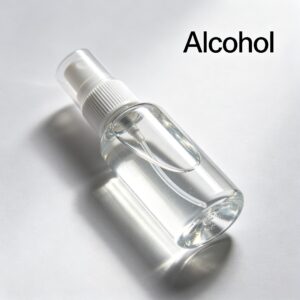
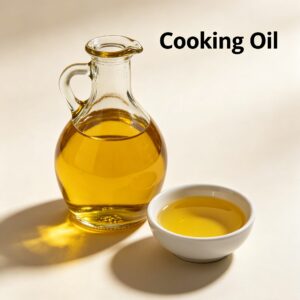
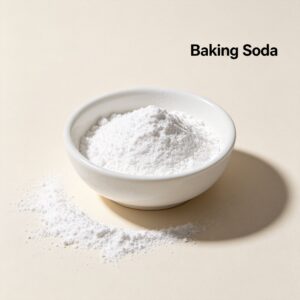
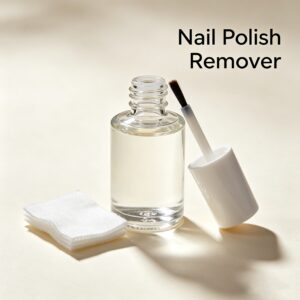
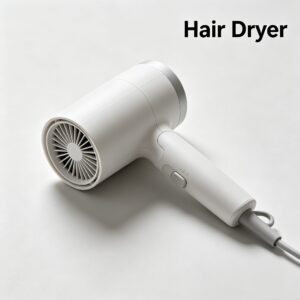
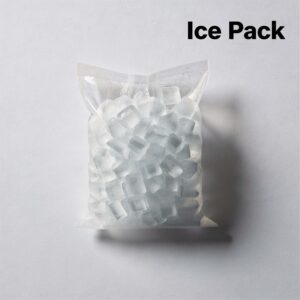
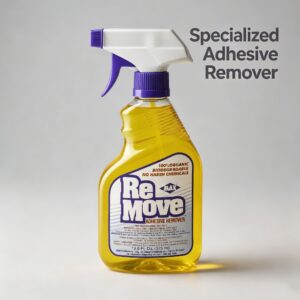
For most glass surfaces, plastic scrapers are safer than metal blades. Unless it can be confirmed that the glass is a plain, untreated surface, it is not recommended to use a metal blade initially.
3. Select the method based on the amount of residual adhesive
| Residual situation | Recommended method |
| Fresh sticker residue | Hot soapy water + plastic scraper |
| Residual adhesive from aging stickers | Hair dryer softening + alcohol wipe |
| Slight adhesive residue | White vinegar or cooking oil |
| Strong adhesive residue | Isopropyl alcohol or special adhesive remover |
| Thick rubber block / soft rubber block | Ice pack cold compress + plastic scraper |
| Printed, coated, or laminated glass | Test first, then choose a gentle method. |
No single method works for all types of glass adhesive residue.
A safer approach is first to determine the type of glass and the degree of adhesive residue, starting with gentle methods such as hot soapy water.
If these methods are ineffective, gradually try white vinegar, cooking oil, isopropyl alcohol, or specialized adhesive removers.
How to safely remove adhesive stickers from glass
Different types of sticker adhesives require different removal methods. Generally, it is recommended to follow this approach:
First, soften the adhesive layer, then remove it gently, and finally select a suitable cleaning agent based on the amount of residue remaining.
For standard glass, it is advisable to start with gentle methods such as hot soapy water or a plastic scraper; if the residue is stubborn, gradually try using alcohol, cooking oil, or a specialized adhesive remover. For coated, filmed, printed, or decorative glass, perform a small-area test first to avoid damaging the surface.
1. Hot soapy water soaking method
It is one of the safest and most commonly used methods. Warm water softens the adhesive layer, while dish soap helps reduce stickiness, making the residue easier to remove.

✅ Suitable for:
- Freshly removed stickers
- paper labels
- glass bottle labels
- light adhesive residue
- standard glass surfaces.
➡️ Operating steps:
- Step 1: Add a small amount of dish soap or mild soap to warm water.
- Step 2: Dampen a soft cloth or sponge with the soapy water and apply it over the adhesive residue.
- Step 3: Wait 5–10 minutes to allow the adhesive layer to soften thoroughly.
- Step 4: Gently scrape off the residue starting from the edges using a plastic scraper, an old bank card, or a plastic card.
- Step 5: Wipe the glass with clean water, then dry it with a clean microfiber cloth.

💡 Honeyoung’s Manufacturer Note:
In label and packaging applications, the removability of many paper labels is considered during the design phase. Therefore, when dealing with residual adhesive from standard labels, it is usually best to try gentle methods first.
2. Hair dryer heating method
The adhesive on some stickers softens and loses tackiness when heated; therefore, applying heat can make it easier to remove the stickers from the glass surface.

✅ Suitable for:
- Labels applied for extended periods
- Aged stickers
- Shipping labels
- Stickers that tend to fragment upon removal
- Cases where the adhesive layer has hardened
➡️ Operating steps:
- Step 1: Use a hair dryer on the warm setting, aiming it at the sticker or the area with adhesive residue.
- Step 2: Hold it there for a few seconds to nearly a minute to allow the adhesive layer to gradually soften.
- Step 3: Once the sticker or adhesive has softened, slowly remove it using a plastic scraper.
- Step 4: If any residue remains, you can wipe the area with white vinegar, alcohol, or soapy water.

💡 Honeyoung’s Manufacturer Note:
Temperature affects the state of the adhesive. Many pressure-sensitive adhesives lose some of their initial tack as the temperature rises; therefore, applying moderate heat can make cleaning easier.
3. White Vinegar/Alcohol Cleaning Method
Both white vinegar and isopropyl alcohol (rubbing alcohol) can help soften and remove adhesive residue from glass, though they differ in cleaning effectiveness and suitable applications.
- White vinegar is relatively mild and suitable for removing light to moderate adhesive residue.
- Isopropyl alcohol (or rubbing alcohol) has superior dissolving power and is suitable for tackling stickier or more stubborn adhesive marks.

✅ Suitable for:
- Adhesive residue that cannot be completely removed with hot soapy water
- Moderately sticky adhesive marks
- Aged, thin adhesive layers
➡️ Operating steps:
- Step 1: Pour a small amount of white vinegar, isopropyl alcohol, or rubbing alcohol onto a soft cloth or paper towel.
- Step 2: Cover or wipe the area with adhesive residue and let the liquid sit for a few minutes to take effect.
- Step 3: Once the adhesive has softened, gently wipe it away with a soft cloth.
- Step 4: For stubborn residue, a plastic scraper can be used to assist in removal.
- Step 5: Finally, wipe the glass with clean water to remove any remaining cleaning agent.

💡 Honeyoung’s Manufacturer Note:
While alcohol-based cleaners can help remove some adhesive residue, not all adhesives respond to alcohol in the same way. Therefore, the type of adhesive and the condition of the glass surface must be considered when selecting a cleaner.
4. Cooking Oil/Baking Soda Cleaning Method
Cooking oil helps soften the adhesive layer, making residual glue easier to wipe away, while baking soda helps remove traces of adhesive through gentle abrasion. Both methods are suitable for dealing with minor adhesive residue.

✅ Suitable for:
- When the use of strong solvents is not desired
- Common household adhesive residues range from light to moderate
- Standard glass surfaces
4.1 Cooking Oil / Olive Oil
➡️ Operating steps:
- Step 1: Apply a small amount of cooking oil to the adhesive residue.
- Step 1: Let it sit for about 10–15 minutes.
- Step 1: Wipe away the residue with a soft cloth.
- Step 1: Use a plastic scraper to assist if necessary.
- Step 1: Finally, wash off the oily film with dish soap.

💡 Honeyoung’s Manufacturer Note:
A secondary cleaning is required after the oil treatment; otherwise, an oily film may remain on the glass surface, making it prone to attracting dust or fogging up.
4.2 Baking soda
➡️ Operating steps:
- Step 1: Mix baking soda with a small amount of water to form a paste.
- Step 1: Apply the paste to the area with adhesive residue.
- Step 1: Gently wipe with a soft cloth.
- Step 1: Rinse off any residue with clean water.

💡 Honeyoung’s Manufacturer Note:
Do not rub vigorously; exercise caution when using on coated glass, decorative glass, or delicate surfaces.
5. Cleaning method using a specialized adhesive remover
When mild methods—such as hot soapy water, white vinegar, or alcohol—prove ineffective, consider using a specialized adhesive remover. These products typically offer superior softening and dissolving capabilities, making them suitable for tackling stubborn adhesive residue.

✅ Suitable for:
- Aged adhesive layer
- Thick adhesive residue
- Adhesive marks that cannot be removed by standard methods
- Large-area label adhesive residue
➡️ Operating steps:
- Step 1: Read the product instructions and verify the scope of application.
- Step 2: Test on an inconspicuous area of the glass first.
- Step 3: Apply a small amount of the adhesive remover to the area with residual adhesive.
- Step 4: Allow the product sufficient time to work and soften the adhesive layer.
- Step 5: Remove the residual adhesive using a soft cloth or plastic scraper.
- Step 6: Finally, clean the glass surface with water or soapy water.

🚫 Tips:
To safely and effectively remove adhesive residue, avoid the following common mistakes.
| Avoiding | Reason |
| Use metal blades from the beginning | It may scratch the glass or damage the special treatment layer |
| Rub with a steel wool or a rough tool | Minor scratches may remain, affecting the glass’s transparency and appearance |
| Using strong solvents without testing | May damage printed, laminated, or decorative surfaces |
| Prolonged high-temperature heating | This may cause uneven heating of the glass. |
| Scrape off the remaining adhesive forcefully | It may damage the glass and could also cause the adhesive residue to spread more severely |
| No cleaning after using oil-based methods | An oil film can remain on the glass surface, causing fogging and attracting dust |
| Mix cleaning agents randomly | It may produce an irritating odor and even affect the cleaning effect |
| Ignore borders and decorative parts | Solvents may affect plastics, inks, or adhesive edges |
Factors Affecting Sticker Adhesive Residue

Julia Lee explains:
“Through my experience in stationery and label manufacturing, I have found that removing sticker adhesive from glass is not only about choosing the right cleaning method.
The final result also depends on factors such as adhesive type, sticker material, application time, environmental conditions, and glass surface treatment.
By understanding these factors, we can select a more suitable removal method and better protect the glass surface.”
——Julia Lee, Stationery Manufacturing Specialist
She has exported backpacks, exercise books, stationery, and other products worth 400 million USD in the past 30 years.
With years of experience, Julia enjoys a high reputation in China’s stationery export industry.
Julia Lee leads a 50+-member foreign trade team, providing annual procurement solutions totaling $60 million for global customers.
1. Adhesive Types and Label Applications
Different types of adhesives are used for different labels. During the label manufacturing process, different adhesives with different properties are selected based on requirements such as product intended use, application time, usage environment, and whether removal is required.
1.1 Removable Adhesive
Removable adhesive labels are primarily used for labels that require easy removal. These labels are typically designed for easy replacement, so they can often be effectively removed using gentle methods such as hot soapy water.

✨ Features:
- Relatively low adhesion
- Easier to remove intact
- Typically leaves little residue
🌍 Common Applications:
- Event stickers
- Short-term price tags
- Temporary promotional labels
1.2 Permanent Adhesive
Permanent adhesive is used for labels that need to be fixed for a long time. Because the adhesive has a long bonding time with the glass surface, it is usually necessary to soften the adhesive layer before cleaning.

✨ Features:
Stronger adhesion
Leaves less adhesive residue after removal
- Can withstand transportation, storage, and environmental changes
🌍 Common Applications:
Product label
Packaging label
Long-term identification label
1.3 Barcode label adhesive
Barcode labels are typically used for product tracking and inventory management, and it is necessary to ensure that the labels remain stable throughout the supply chain.

✨ Features:
Requires good adhesion
Not easily detached due to friction or transportation
Removal difficulty depends on the type of adhesive and the application time
🌍 Common Applications:
- Logistics labels
- Warehouse labels
Product identification labels
1.4 Decorative Sticker
Decorative stickers typically focus more on their long-term effects.

✨ Features:
Requires good durability
May leave more residue upon removal
- May be affected by long-term sunlight and temperature changes
🌍 Common Applications:
Decorative glass stickers
Brand display stickers
Permanent decorative labels
At Honeyoung, we understand that there is no single answer to which adhesive is easiest to remove. In label manufacturing, adhesive design requires a balance between bonding strength, durability, and removability. Therefore, the amount of adhesive residue depends on the intended application and performance requirements of each label.
Labels intended for different uses require different adhesive properties. If you would like to learn more about sticker types and their applications, please check out our article The 20 Most Popular Types of Stickers in 2025.
2. Sticker material
Permanent adhesive is used for labels that need to be fixed for a long time. Because the adhesive has a long bonding time with the glass surface, it is usually necessary to soften the adhesive layer before cleaning.
2.1 Paper stickers
Paper stickers are one of the most common labeling materials.

⭐ Features:
- Easily tears when peeled off
- May leave paper scraps and adhesive residue
- The top layer may be peeled off, but the underlying adhesive layer may remain
🎯 Common Applications:
- Price tags
- Packaging labels
- Product instruction labels
✅ Handling Recommendations:
It is generally recommended to first soften the paper and adhesive layers with hot soapy water to make them easier to separate.
2.2 Thin film stickers
Film-type stickers are typically made of materials such as PET, PVC, and PP.

⭐ Features:
Waterproof and durable, it is not easily torn when peeled off
Although the surface layer is easy to remove, adhesive residue may remain
🎯 Common Applications:
Product labels
Outdoor labels
Transparent labels
- Anti-counterfeiting labels
✅ Handling Recommendations:
The appropriate method should be chosen based on the type of adhesive; one cannot judge how easy it is to clean simply by whether the sticker can be completely peeled off.
The sticker’s material determines what happens during removal.
For example, paper labels may leave behind both paper and adhesive layers, while film labels can usually be peeled off completely, but adhesive may remain on the glass surface.
Therefore, the handling method needs to be chosen based on the label’s structure.
3. Usage Duration and Environmental Factors
The degree of adhesive residue on stickers depends not only on the adhesive and its material, but also on the usage time and the environment in which it is used.
3.1 Usage time
- Short-term labels, due to their shorter application time, typically have a fresher adhesive layer and are easier to remove; examples include temporary promotional labels, event stickers, and short-term price tags.
- Long-term labels, on the other hand, have a longer adhesive bonding time with the glass surface, usually requiring more softening steps to remove; examples include product identification labels, long-term display stickers, and outdoor labels.

3.2 Environmental impact
Temperature, sunlight, humidity, and storage conditions can all change glue properties.
- High temperatures may soften and spread the adhesive, increasing the area of residue;
- Low temperatures may harden the adhesive layer, making removal more difficult;
- Sunlight exposure may accelerate adhesive aging, making residue more noticeable;
- Humid environments may affect the structure of paper labels, causing the paper layer to peel off while the adhesive layer remains on the glass surface.

4. Glass surface treatment
Different glass surface treatments can affect the amount of adhesive residue and the difficulty of cleaning.
Ordinary glass surfaces are relatively stable and can usually be removed using standard adhesive removal methods.
Specially treated glass, such as:
- Coated glass: The surface typically has functional coatings such as anti-glare, heat insulation, and UV protection. It may be more sensitive to strong solvents and excessive friction.
- Filmed glass: The surface has an added protective or functional film. Strong scratches, high-temperature treatments, or unsuitable cleaning agents may affect the film’s effectiveness.
- Printed or decorative glass: The surface may have ink, patterns, or decorative layers. Certain alcohol-based cleaners or solvents may affect the visual effect.
Because the surface may have added functional coatings, protective films, or decorative layers, its tolerance to cleaning agents and abrasion may vary, so extra care is required.

From a product application perspective, when removing sticker adhesive, one cannot only consider the adhesive itself, but also the treatment of the glass surface. The same adhesive may have completely different cleaning effects on ordinary glass and specially treated glass.
Honeyoung understands that different adhesives are designed for specific purposes, resulting in variations in their adhesion strength, durability, and removability.
FAQ
How do you get sticker glue off glass quickly?
You can first use a hairdryer to warm and soften the residual adhesive, then gently scrape it off with a plastic scraper. If there is still residue, you can wipe it with isopropyl alcohol or white vinegar.
What is the safest way to remove sticker glue from glass?
The safest first step is usually hot soapy water with a plastic scraper. It’s gentle and suitable for most ordinary glass surfaces.
Can vinegar remove sticker glue from glass?
Yes. White vinegar is suitable for light to moderate adhesive residue. You can cover the residue with a soft cloth or paper towel soaked in white vinegar for a few minutes before wiping.
Is rubbing alcohol safe for glass?
Ordinary glass can usually be used, but coated, laminated, printed, or decorative glass needs to be tested first.
How do you remove sticker glue from glass bottles?
You can first soak it in hot soapy water, then use a plastic scraper, white vinegar, cooking oil, or baking soda paste to remove any remaining adhesive. If the bottle has printed designs, it is not recommended to use strong solvents directly.