


introduction
Finding the right types of folders may seem simple, but it’s something many people only consider after problems begin to appear. Folders tear, bend, get dirty, or run out of space far sooner than expected, and documents end up harder to manage than they should be.
In reality, these issues usually come from using the wrong folder for the task. Understanding the different types of folders makes it much easier to protect files and stay organized.

📂 Why Choosing the Right Folder Matters
Finding the right folder to store documents is more important than many people realize. Using the wrong folder can lead to bent pages, lost paperwork, or even permanent damage over time.
When files aren’t properly protected, organization becomes harder and work efficiency drops. Before diving into the different types of folders, it is helpful to understand the common problems people encounter when the wrong folder is used.
⚠️ Common Problems Caused by the Wrong Folder
Choosing the wrong folder doesn’t just affect organization; it can damage documents, waste time, and shorten the folder’s lifespan.
Below are some common issues people run into before they understand which folder type actually fits their needs.
1. Overfilled folders that tear or break
When too many documents are forced into a folder, the edges split, and the folder quickly falls apart.
2. Folders that bend and lose their shape
Thin folders often warp in bags or drawers, leaving documents with creased corners.
3. Folders that get dirty or stained easily
Without proper material protection, folders pick up dirt, moisture, or stains over time.
4. Ring binders that reach capacity too quickly
Small ring sizes limit the number of pages, making it difficult to add new documents or flip through pages smoothly.
5. Low-capacity folders
Some folders hold only a small number of sheets, forcing users to split one file into multiple folders.

These issues usually come down to one thing: using the wrong folder for the job. Understanding the different types of folders and what each one is designed for helps prevent these problems before they happen.
types of folders By Structure
Previously, when choosing folders, I never paid attention to their opening and closing mechanisms or file storage functionality. It wasn’t until I frequently encountered the inconvenience of files slipping out and being difficult to access that I realized: the folder’s structural design is actually the key to its usability.
Each folder structure has a specific use case. Whether you need quick file retrieval, frequent addition or removal of pages, or long-term secure storage, you can find the most suitable types of folders here.
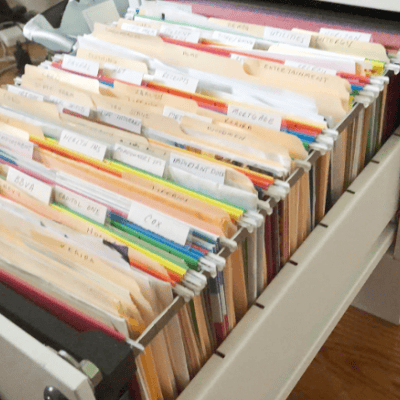
1. Manila file folders
A manila folder is one of the most common and familiar items you’ll find in offices and schools. Among the many types of folders used for document organization, it stands out for its simplicity and reliability.
Made from sturdy manila paper, it’s easy to label, lightweight to handle, and practical for everyday filing, helping keep documents neat and easy to access without any unnecessary complexity.
An in-depth look
- Color: Light yellow / buff
- Size: A4 or Letter
- Material: Sturdy manila paper
- Features: Flat design, tab for labeling, lightweight
- Purpose: Everyday document filing and organization
- Cost: Economical, suitable for bulk use

Pros
Simple design that’s easy to use and organize
Lightweight and easy to handle or store
Easy to label with tabs for quick identification
Low cost, suitable for bulk filing in offices and schools
Works well with standard filing cabinets
Cons
Less durable than pressboard or plastic folders
Not water- or tear-resistant
Limited capacity for thick document sets
Can bend or wear out with frequent use
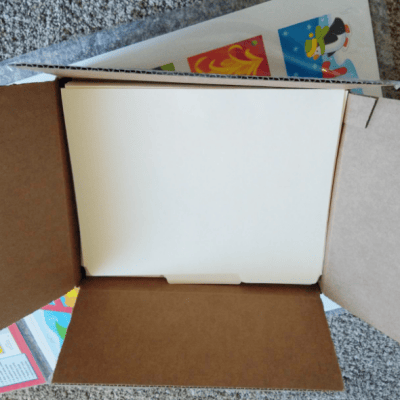
Product Recommendation: Pendaflex Manila File Folder
Pendaflex File Folders are a straightforward, dependable option for everyday filing. Among the many types of folders used in offices, schools, and homes, they stand out for being practical, easy to label, and cost-effective.
Made from sturdy paper, they hold up well to regular use, while the tabs make it simple to organize and find documents at a glance. Designed for standard letter-size papers, they fit neatly into file drawers or hanging systems.

Features:
Made from durable Manila paper for everyday filing.
Letter-size design fits standard documents neatly.
1/3-cut tabs in multiple positions for easy labeling.
Bottom scored to expand as files grow.
Works well with hanging folders and file drawers.
Practical choice for home, school, and office use.
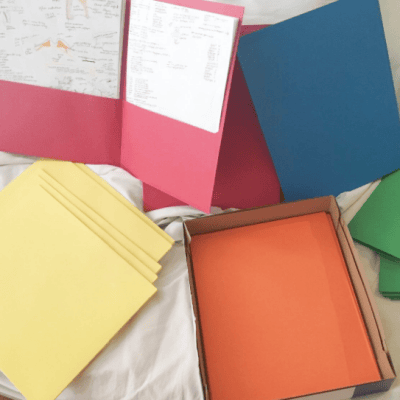
2. Pocket file folder
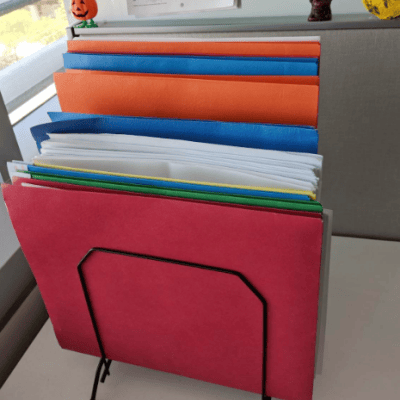
A pocket file folder is one of those handy items you reach for when you need to keep papers together without overthinking it. Among the many types of folders, this one is especially popular for its simple pockets that hold loose documents securely without punching holes.
It’s easy to use, easy to carry, and works well for distributing school handouts, taking meeting notes, or organizing tasks in offices and for everyday work.
An in-depth look
Color: Various solid colors or manila
Size: A4 or Letter
Material: Paper, cardstock, or plastic
Features: One or two pockets, no punching needed
Purpose: Holding and carrying loose documents
- Use cases: School handouts, meetings, presentations
- Cost: Affordable and suitable for bulk use

Pros
Simple design that’s quick and easy to use
No hole punching needed, saving time
Lightweight and easy to carry between locations
Keeps documents neat for short-term organization
Cost-effective option for schools and offices
Cons
Limited capacity for thick document sets
Papers may slip out if not handled carefully
Paper versions wear out with frequent use
Not suitable for long-term or archival filing
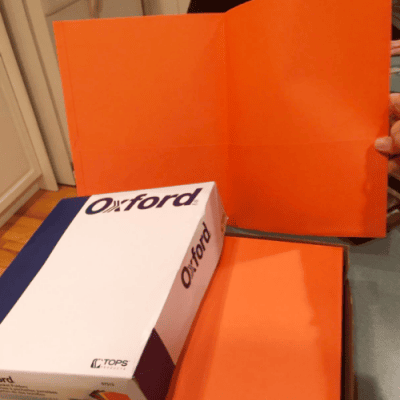
Product Recommendation: Oxford 2 Pocket Folders
These Oxford 2-pocket folders are a colorful, practical option for everyday organization. Among the many types of folders we use, this one stands out for its simple layout and generous capacity; each pocket can hold plenty of loose papers without feeling cramped.
The textured paper cover feels sturdy in hand, and the assorted colors make it easy to sort by subject or project. Little details like the built-in business card slot keep things organized in a straightforward, no-fuss way.

Features:
Two pockets with a total capacity of up to 100 sheets
Assorted bright colors for easy subject or project sorting
Made from durable, textured paper
Includes a die-cut business card holder inside
Letter-size fit for standard documents
Made with recycled and post-consumer fiber
Suitable for school, office, or home use
3. Expandable File Folders
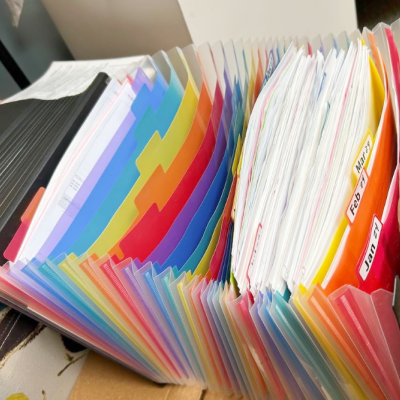
Expandable file folders are also called accordion folders, which are a practical choice when paperwork starts to pile up, and you want everything in one place. Among the many types of folders, this one stands out for its accordion-style design that expands as you add more documents.
With multiple sections for sorting, it’s easy to keep files organized by topic, date, or project, making it especially useful for offices, schools, and anyone handling a growing set of papers.
An in-depth look
Color: Black, gray, or assorted colors
Size: Usually A4 or Letter, designed for standard documents
Material: Plastic (PP) or heavy paperboard
Features: Accordion-style, Multiple inner sections, Often includes tabs or labels
Purpose: Organize growing sets of documents in one folder
- Use cases: Projects, monthly paperwork, invoices, receipts, or school subjects
- Cost: Generally moderate, more than basic paper folders

Pros
Expands to hold a large number of documents
Multiple sections help keep files sorted
Keeps everything in one place
Often includes a closure for added security
Cons
- Bulkier than flat folders
- Can be slower to access individual papers
- Less rigid than binders
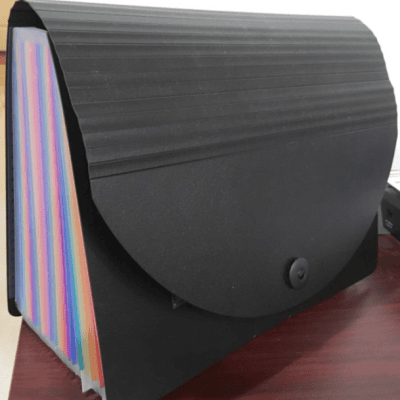
Product Recommendation: ABC life 26 Pockets Accordion File Organizer
This accordion expanding file folder is a practical choice when paperwork starts to build up. Among the many types of folders used for home and office organization, this one stands out for its large expandable capacity and clear tabs that make sorting simple and intuitive.
Made from durable polyester and polypropylene, it expands as your files grow and folds back down to save space when you don’t need the extra room.

Features:
26 expanding pockets for large-capacity document storage
Accordion-style design expands up to 28 inches as files grow
A–Z large tabs with color-coded inner pages for easy categorization
Made from durable polyester and polypropylene
Closed bottom design helps keep papers in place
Fits A4 and Letter size documents
Lightweight and space-saving, expands when needed

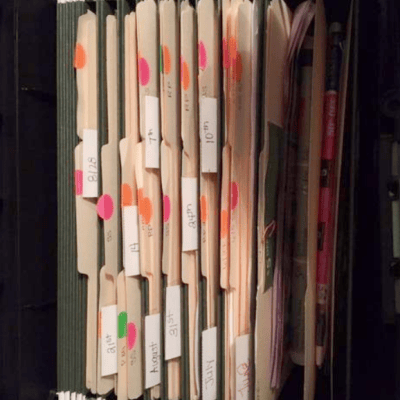
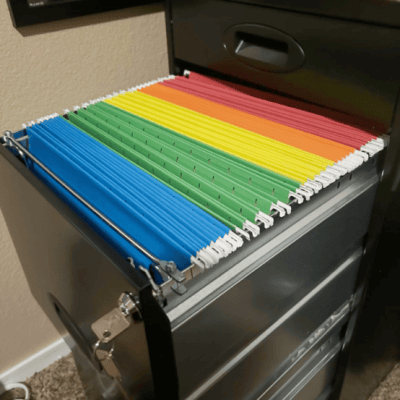
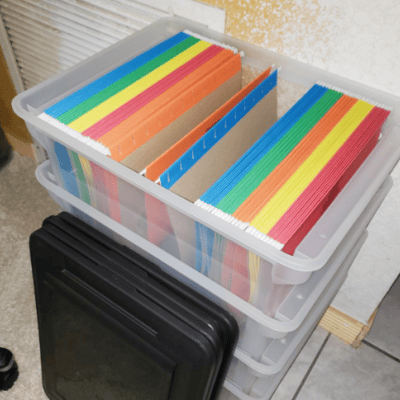
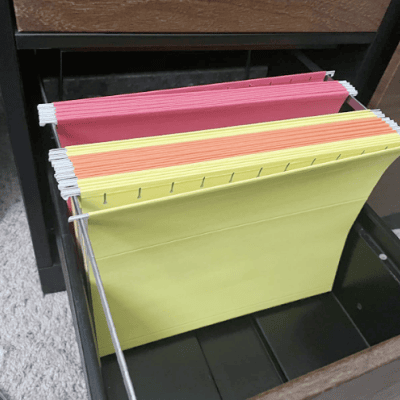
4. Hanging folder
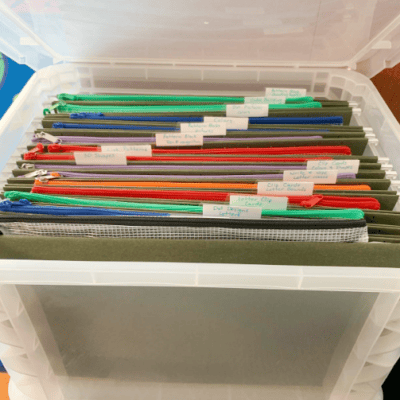
A hanging folder is one of those practical filing tools that makes drawer organization feel effortless. Among the many types of folders, it’s designed to hang neatly inside file drawers using metal or plastic rails, keeping documents upright and easy to flip through.
It’s a simple, reliable option for offices and workspaces where quick access and tidy filing really matter.
An in-depth look
Color: Commonly green, blue, gray
Size: Letter or A4
Material: Paperboard or pressboard with metal/plastic rails
Features: Hangs on drawer rails, tab for labeling
Purpose: Organizing documents neatly in filing cabinets
Uses: Organizing documents in filing cabinets and office drawers
Cost: Moderate, affordable for everyday office filing

Pros
Keeps files upright and well-organized
Easy to browse and access in file drawers
Works well with labels for quick identification
Helps maintain a neat filing system
Cons
Requires a compatible filing cabinet
Less portable than flat folders
Limited capacity for very thick files
Product Recommendation: Pendaflex Hanging File Folders
Pendaflex recycled hanging folders are a practical, everyday solution for keeping files in order while staying mindful of sustainability. Among the many types of folders used in offices, this one stands out for its bright, easy-to-sort colors.
Designed for standard letter-size documents, they’re a reliable choice when you want a clean, organized file drawer without any extra fuss.

Features:
Letter-size design fits standard 8.5 × 11 inch documents
Made from recycled paper, including post-consumer fiber
Assorted bright colors help organize files by category
1/5-cut adjustable tabs for clear, flexible labeling
Contrasting kraft interior reduces accidental misfiling
Designed to hang smoothly in file drawers
5. Ring binder folder
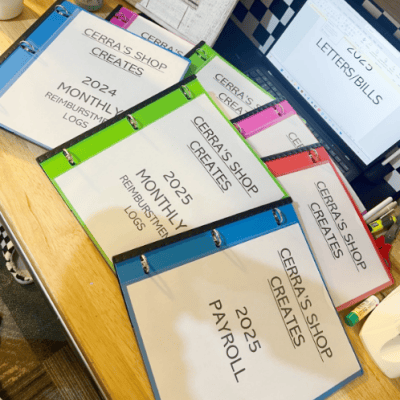
A ring binder folder is a familiar and flexible option for keeping documents neatly in order. Among the many types of folders, this one stands out because pages can be added, removed, or rearranged at any time using the metal rings inside.
It’s commonly used for manuals, training materials, or ongoing projects where documents change often, making it an ideal choice for offices, schools, and everyday work.
An in-depth look
Color: Black, white, blue, or assorted colors
Size: A4 or Letter
Material: PP/PVC, paperboard, or PU cover with metal rings
Features: Metal rings allow pages to be added, removed, or rearranged easily
Purpose: Keeping documents organized in a flexible, reusable way
Uses: Manuals, training materials, reports, presentations
Cost: Moderate to higher than basic folders

Pros
Easy to add, remove, or rearrange pages
Holds a large number of documents
Keeps papers secure and well-organized
Suitable for long-term use
Cons
Bulkier than flat folders
More expensive than basic paper folders
Requires hole-punched documents
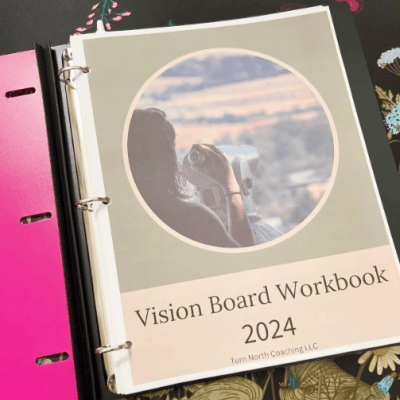
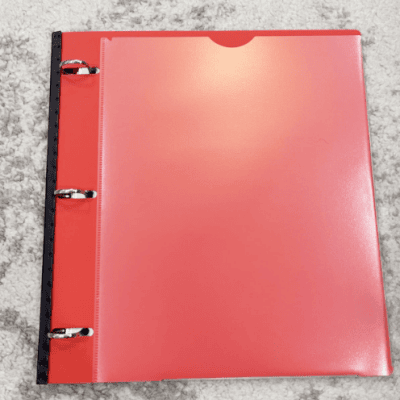
Product Recommendation: INFUN Ring binder folder
Among the many types of folders and binders available today, the INFUN telescoping ring binder stands out for its adjustable telescoping spine, which lets you expand or slim it down depending on how many papers you’re carrying.
Made from thick, durable plastic, it’s lightweight yet sturdy enough, while the foldable front cover lies flat on a desk or folds back like a clipboard when you need to save space. It’s a practical choice for anyone who wants flexible storage.

Features:
Lightweight yet durable plastic for daily use
Letter-size compatible, holds up to about 160 sheets
Compact and portable compared to traditional bulky binders
Metal 3-ring mechanism for easy adding, removing, and rearranging pages
The foldable front cover lies flat for writing or folds back to save desk space
The telescoping spine design allows the binder to expand or shrink based on document volume
6. Clip folder
A clip folder is a simple, practical way to keep papers together without punching holes. Among the many types of folders, this one is especially handy when you need quick access.
Just lift the clip, add your papers, and you’re ready to go. It’s often used for meetings, reports, or on-the-go work, where convenience matters more than long-term filing.
An in-depth look
Color: Blue, gray, or assorted colors
Size: A4 or Letter
Material: Plastic, paperboard, or metal clip with rigid cover
Features: Strong clip holds papers securely, no hole punching needed
Purpose: Keeping documents together for quick access
Uses: Meetings, reports, presentations, on-the-go paperwork
Cost: Low to moderate

Pros
No hole punching required
Quick and easy to use
Lightweight and portable
Holds papers firmly in place
Cons
Limited document capacity
Clip can leave marks on paper
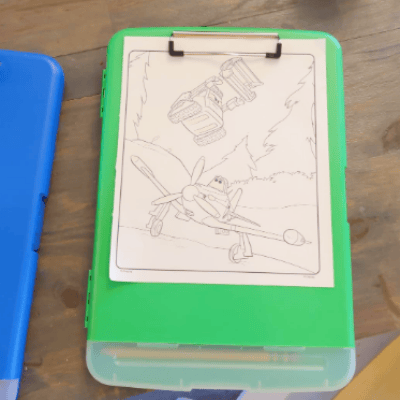
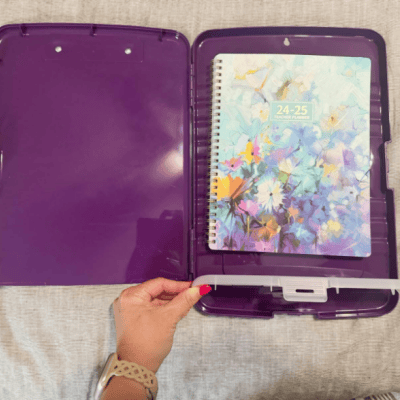
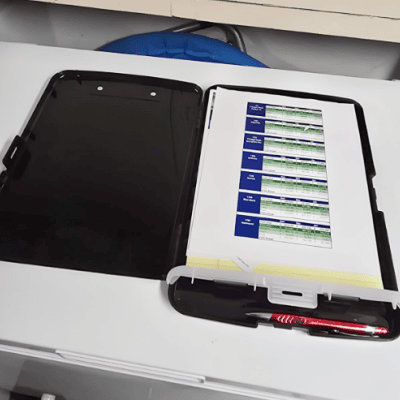
Product Recommendation: SFLHHDM Clipboard with Storage
This SFLHHDM storage clipboard folder is a practical, on-the-go solution for people who work with papers all day. Among the many types of folders available, it combines the functions of a clipboard and a document case, letting you write on the surface while safely storing papers inside.
Made from durable, waterproof plastic, it holds a large number of documents and has space for pens, making everything easy to carry and access. It’s especially useful in busy environments like hospitals, schools, and offices.

Features:
Clipboard + folder combo for writing and document storage in one
High capacity, holds over 200 letter-size sheets
Made from durable, waterproof polypropylene
The metal clip holds papers securely without leaving marks
Built-in pen holder for multiple pens or pencils
Lightweight and portable, easy to carry all day
7. File jackets
Among the many types of folders, file jackets are especially useful when you want to store loose papers without them slipping out, thanks to their enclosed sides and bottom.
Choosing the right folder type is only part of keeping your files in good condition. Cardboard and thick printing paper are suitable for categorized folders, while glossy paper and photographic paper are suitable for display folders. Different types of paper should be stored in different types of folders.
If you want to learn more about the uses of different types of paper and how to store them correctly, read 20 Different Types of Paper and Uses: The Ultimate Guide
An in-depth look
Color: Assorted colors
Size: Letter or A4
Material: Heavy paper or pressboard
Features: Enclosed sides and bottom to prevent papers from slipping out
Purpose: Protecting and keeping loose documents together
Uses: Reports, records, project files, medical or office documents
Cost: Low to moderate, affordable for everyday use

Pros
Enclosed design keeps papers from slipping out
Offers better protection than flat folders
Easy to use, no punching required
Cons
Limited capacity for thick document sets
Less convenient for frequent access
Not as durable as pressboard or binders
Product Recommendation: Pendaflex File Jackets
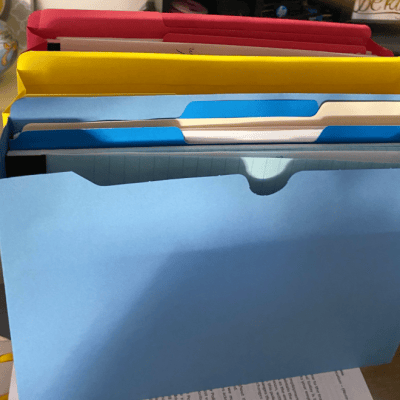
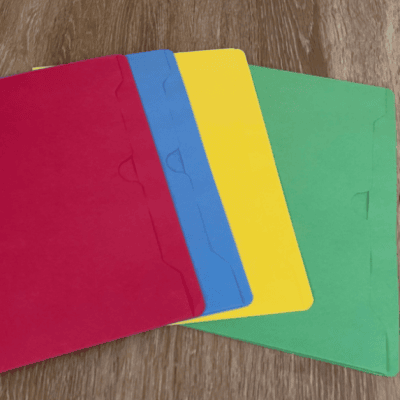
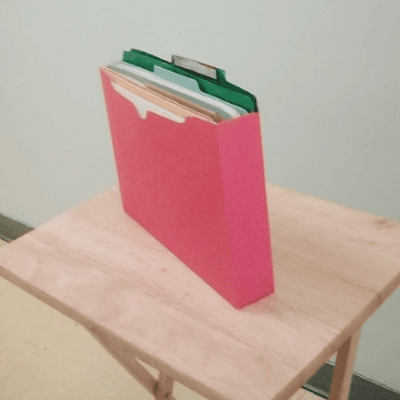
This Pendaflex expanding file jacket is a practical solution for handling bulky paperwork among the many types of folders without worrying about pages slipping out.
The reinforced top and full-height sides add durability, while the thumb-cut front makes it easy to grab documents when you’re in a hurry. It’s especially handy for manuals, printouts, or projects.

Features:
2-inch expansion holds large, bulky document sets
Enclosed on three sides to keep papers from slipping out
Full-height sides fit letter-size (8.5 × 11) sheets securely
Thumb-cut front allows quick access to contents
Suitable for office, classroom, homeschool, and home filing
Reinforced top and straight-cut tab for durability and easy labeling
8. Display folder
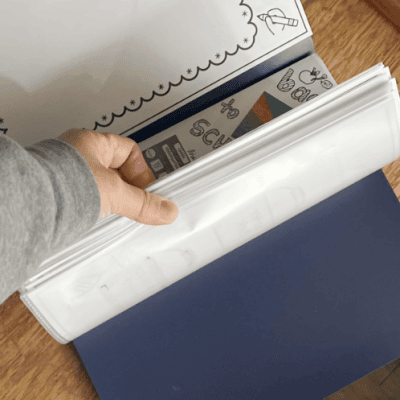
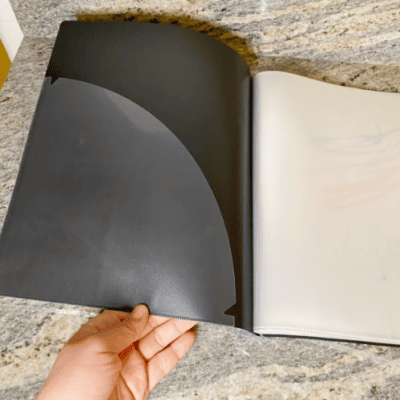
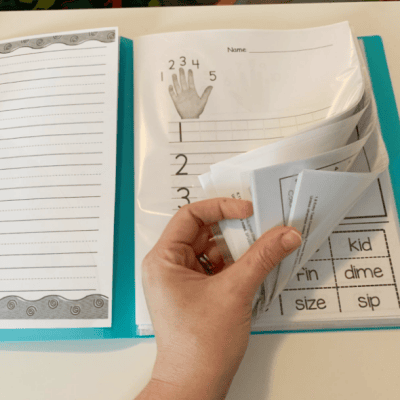
A display folder is a neat, presentable way to show documents without taking them in and out all the time. Among the many types of folders, it’s designed with clear inner sleeves that keep pages protected while still easy to read.
It’s commonly used for presentations, portfolios, or reports, any time you want your documents to look organized and ready to share at a glance.
An in-depth look
Color: Commonly black, blue, clear, or assorted colors
Size: A4 or Letter
Material: PP/PVC cover with clear inner sleeves
Features: Built-in transparent pockets protect pages without punching
Purpose: Presenting documents neatly and professionally
Uses: Presentations, portfolios, reports, proposals
Cost: Low to moderate

Pros
Keeps documents clean and protected
No hole punching required
Pages are easy to view and flip through
Gives a neat, professional appearance
Cons
Fixed number of pages, limited capacity
Pages cannot be rearranged easily
Product Recommendation: Dunwell Presentation Binder
This Dunwell display folder is a clean, presentation-ready way to show documents while keeping them protected. Among the many types of folders, this one stands out for its bound clear sleeves that let you flip through pages easily without taking anything out.
The plastic cover and reinforced binding feel sturdy. It’s a solid choice for presentations, certificates, portfolios, or any other purpose where you want to keep things organized and looking good with minimal effort.

Features:
24 bound clear sleeves display up to 48 pages
Fits standard letter-size documents
Durable plastic cover with reinforced binding
Non-glare sleeves resist dirt and moisture
Lightweight and easy to carry for meetings and presentations
Suitable for presentations, portfolios, certificates, and projects
9. Zipper folder
A zipper folder is a practical choice when you want everything kept securely in one place. Among the many types of folders, this one stands out for its zippered closure, which helps prevent papers and small items from falling out when you’re on the move.
It’s often used for travel, meetings, or daily work when you need a bit more protection than an open folder can offer.
An in-depth look
Color: Black, blue, gray, ect
Size: A4 or Letter
Material: PP/PVC, fabric, or PU with zipper closure
Features: Full zipper keeps documents and small items secure
Purpose: Protecting and carrying documents safely
Uses: Travel, meetings, exams
Cost: Moderate, depending on material and zipper quality

Pros
Strong sealing to prevent documents from scattering
Good protection, dustproof, and waterproof
Easy to use, smooth opening and closing
High durability, suitable for long-term use.
Cons
Slightly slow opening and closing speed
The zipper wears out with prolonged use
Limited storage capacity
Not suitable for quick browsing
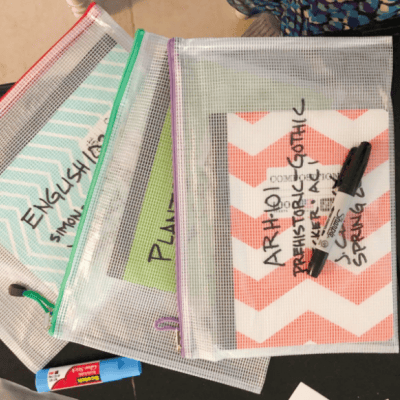
Product Recommendation: EOOUT Mesh Zipper Folder
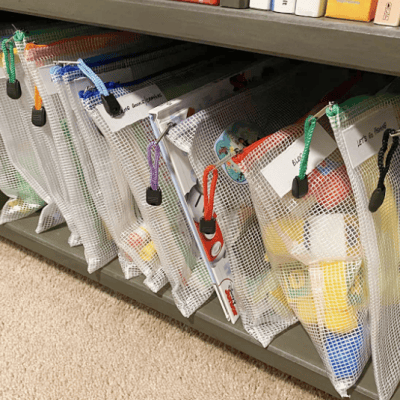
These mesh zipper folders are a colorful, flexible way to keep documents and small items together. Among the many types of folders used for school, office, or travel, the zipper folder stands out for its thickened mesh material.
It’s waterproof and durable, making it suitable for daily use. The slightly transparent design also lets you see what’s inside at a glance, without fully exposing the contents.
They’re easy to use for organizing papers, supplies, or travel essentials while keeping things tidy and protected.

Features:
Made from thickened PVC mesh, waterproof
Letter / A4 size, fits standard documents
Smooth metal zipper for secure closure
Assorted bright colors for easy sorting
Suitable for school, office, and travel organizations
The translucent design makes the contents easy to identify
10. Classification Folders
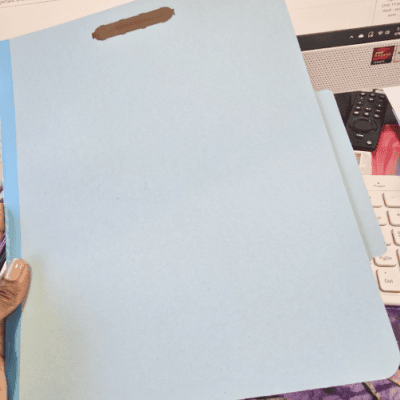
Out of all the types of folders out there, classification folders are perfect for wrangling big piles of documents into neat, distinct sections, all thanks to their built-in dividers and fasteners.
People turn to them most for case files, official records, or long-term projects, where keeping everything organized and easy to follow makes all the difference.
An in-depth look
Color: Usually manila, green, blue, or gray
Size: Letter or A4
Material: Heavy pressboard with metal fasteners
Features: Multiple internal dividers, fasteners on each section
Purpose: Organizing large files into clearly separated sections
Uses: Legal files, medical records, HR files, accounting documents
Cost: Higher prices, but reasonable for long-term filing use

Pros
Suitable for storing large volumes of documents
Sturdy and durable structure for long-term use
Clear file categorization for efficient searching
Improves office organization and facilitates collaboration
Cons
More expensive than basic folders
Thicker and heavier to handle
Takes up more storage space
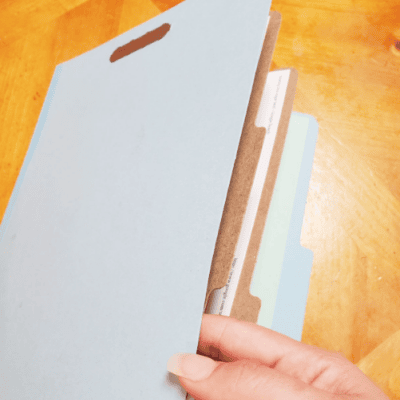
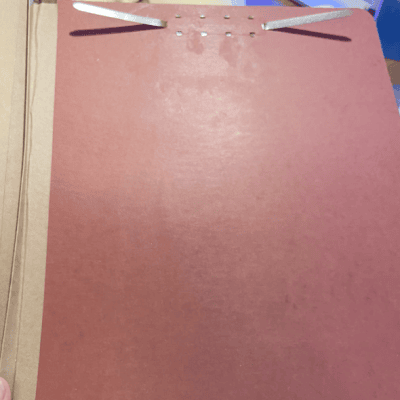
Product Recommendation: Blue Summit Supplies Classification Folders
This classification folder is built for handling large, detailed files that need to stay in order. Among the many types of folders used in offices, this one stands out for its heavy pressboard cover, multiple internal sections, and durable metal prongs that hold documents securely.
With plenty of capacity for bulky files, it’s well-suited for medical charts, client records, or legal paperwork.

Features:
Heavy-duty pressboard cover for durability
High capacity, suitable for bulky or long-term files
Fits standard letter-size documents
Ideal for medical, legal, classroom, and office filing
Strong metal prongs securely hold large document sets
6-section design with internal dividers for clear organization
11. file box
A file box is a practical storage solution when folders start to outgrow your desk or drawer. While it’s not one of the types of folders itself, it’s designed to work alongside them, holding hanging folders, manila folders, or classified files neatly in one place.
Simple, sturdy, and easy to stack or move, a file box is often used for archiving, seasonal paperwork, or keeping inactive files organized and out of the way.
An in-depth look
Color: White, brown, or neutral tones
Size: Fits letter and/or legal folders
Material: Cardboard or corrugated paperboard
Features: Lift-off lid, stackable design, easy-carry handles
Purpose: Storing and protecting folders and documents
Uses: Archiving, seasonal filing, office, and home storage
Cost: Low to moderate, budget-friendly for bulk storage

Pros
Holds a large number of folders and documents
Keeps files protected from dust and clutter
Stackable design saves storage space
Easy to move and organize
Cons
Not as easy to access as open folders
Takes up more space than individual folders
Product Recommendation: Bankers Box File Storage Boxes
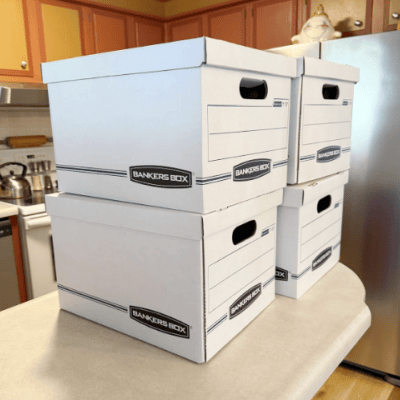
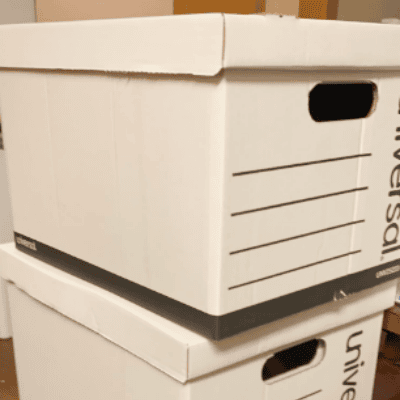
These Bankers Box file storage boxes are a practical way to keep paperwork under control when files start to pile up. While they’re not folders themselves, they work hand in hand with many types of folders to make storage and archiving easier.
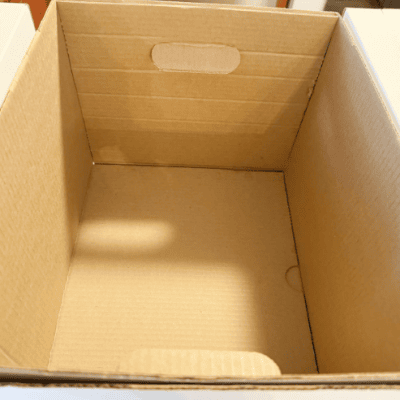
Made from sturdy cardboard, they’re lightweight, easy to assemble, and come with a lift-off lid to keep documents covered and dust-free. They stack neatly, carry thanks to reinforced handles, and fold flat when not in use.

Features:
Made from sturdy cardboard with recycled content
Lift-off lid keeps files covered and dust-free
Reinforced handles for safe and easy carrying
Stackable design to save space
Collapsible when not in use for compact storage
Lightweight and budget-friendly for archival filing
types of folders By Material
Understanding types of folders by material makes it easier to choose what fits your environment, whether you need something lightweight, water-resistant, or built to last.
12. Paper folder
A paper folder is one of the most basic and widely used filing options you’ll come across. Among the many types of folders, it’s valued for being lightweight, affordable, and easy to work with.
Made from paper or thin cardboard, it’s ideal for everyday organization, keeping documents together neatly at school, in the office, or anywhere you just need simple, no-frills filing.
An in-depth look
Color: Commonly manila, white, or assorted colors
Size: A4 or Letter
Material: Paper or thin cardboard
Features: Lightweight, flat design, easy to label
Purpose: Simple organization of loose documents
Uses: Schools, offices, meetings, temporary filing
Cost: Low, very economical for bulk use

Pros
Lightweight and easy to handle
Low cost, ideal for bulk use
Simple design, easy to label
Suitable for everyday, short-term filing
Cons
Limited durability
Not water-resistant
Low capacity for thick documents
Not suitable for long-term storage
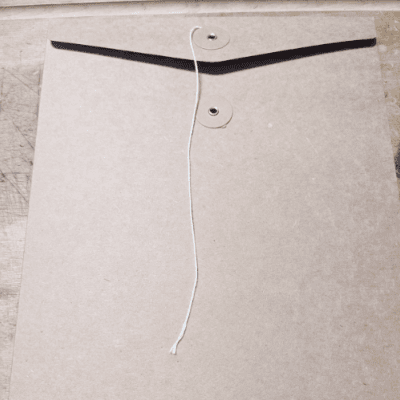
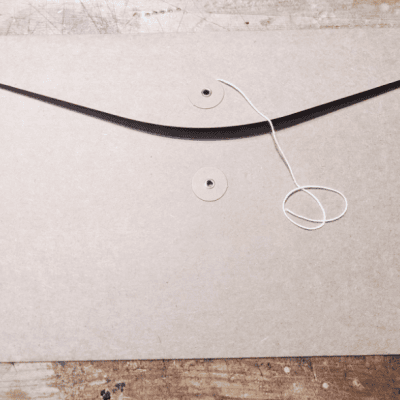
Product Recommendation: NatureTouch A4 Envelopes Kraft Paper Folders
This kraft paper string-tie folder is a simple, practical option for everyday document storage.
Among the many types of folders used in offices, schools, and homes, this one stands out for its sturdy kraft paper material and secure string closure that keeps documents from slipping out.
Designed to fit both A4 and letter-size papers, it works well for filing reports, contracts, invoices, or project notes.

Features:
Made from thick, high-strength kraft paper
A4 & Letter size compatible
String-tie closure keeps documents secure
Water-resistant with good load-bearing capacity
Includes vertical and horizontal styles
Suitable for daily filing and document storage

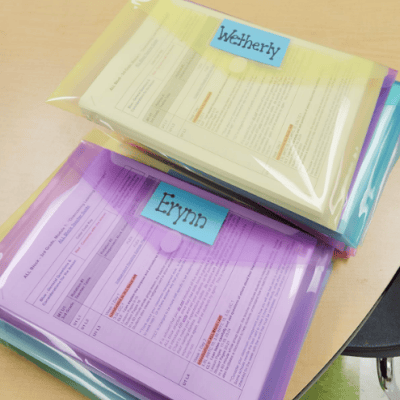
13. Plastic file folder
A plastic file folder is a practical option when you need something a bit tougher than paper. Among the many types of folders, it’s appreciated for being durable, water-resistant, and easy to clean, which makes it suitable for daily use.
Best of all, they’re cheap, come in fun colors, and you can reuse them over and over. Honestly, they’re the no-fuss, reliable sidekick you need for keeping your stuff neat.
An in-depth look
Color: Clear, translucent, or assorted solid colors
Size: A4 or Letter
Material: Commonly PP or PVC
Features: Water-resistant, flexible, tear-resistant, easy to clean
Purpose: Protecting and organizing documents for regular use
Uses: Offices, schools, travel, document transport
Cost: Low to moderate, slightly higher than paper folders

Pros
Water-resistant, protects documents better than paper
- Durable and tear-resistant
Easy to clean and reuse
Lightweight and flexible
Cons
Higher cost than paper folders
Less eco-friendly than paper options
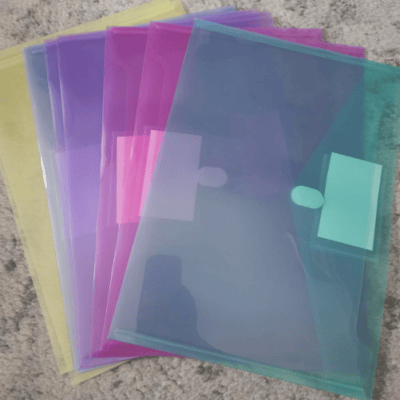
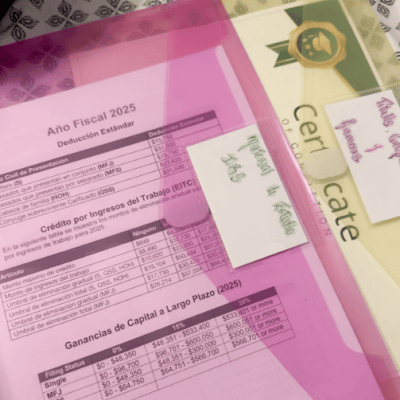
Product Recommendation: Sooez Clear Poly Envelopes Plastic Folders
These clear poly envelope folders are a simple and colorful way to keep documents neatly together. Among the many types of folders people use for school and office, this one lets you see what’s inside at a glance while still keeping papers protected.
Made from sturdy, waterproof plastic, they hold a large number of documents securely, and the closure keeps everything from slipping out. They’re easy to carry, easy to sort by color, and practical for everyday organization.

Features:
Made from thick, high-quality PP plastic
Waterproof and tear-resistant for daily use
Translucent design for quick document identification
Fits A4 and US letter-size papers
Large capacity, holds 200+ sheets
Assorted colors for easy sorting and organization
14. Leather folder
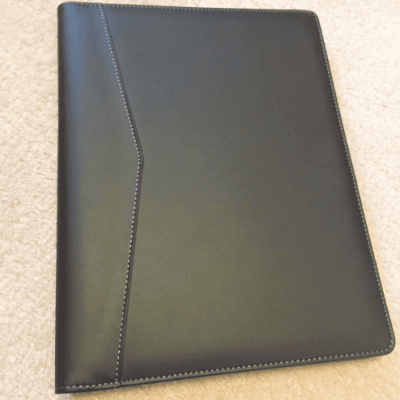
A leather folder is a more refined option when you want documents to look as professional as they feel. Among the many types of folders, it stands out for its premium look and solid feel, often used in business meetings or formal settings.
It’s not just about holding papers; it adds a sense of polish and confidence when presenting or carrying important documents.
An in-depth look
Color: Commonly black, brown, or dark blue
Size: A4 or Letter
Material: Genuine leather or PU (synthetic leather)
Features: Smooth finish, sturdy structure, professional appearance
Purpose: Presenting and carrying documents in a polished way
Uses: Business meetings, presentations, conferences
Cost: Higher than paper or plastic folders

Pros
Professional, premium appearance
Durable and long-lasting material
Makes a strong impression in formal settings
Comfortable to handle and carry
Cons
Higher cost than most other folders
Heavier than paper or plastic options
Not ideal for bulk or everyday filing
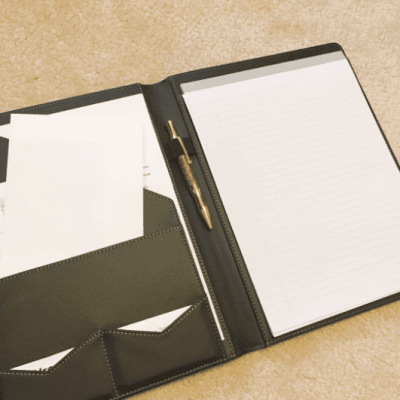
Product Recommendation: STYLIO Organizer Binder
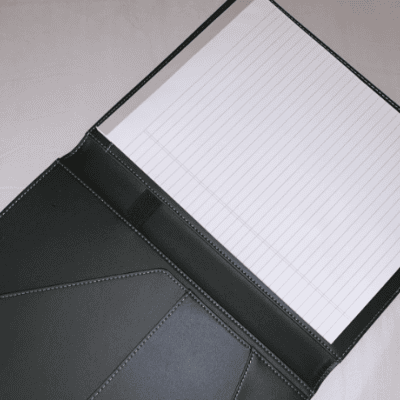
This padfolio-style portfolio binder is designed for people who want their documents to look as professional as they do.
Among the many types of folders used for business and interviews, this one stands out for combining smart organization with a polished, modern look.
It includes practical pockets for documents, cards, and tickets, plus a pen holder and writing pad.
It’s the kind of folder you take to meetings, interviews, or career events when you want to feel prepared and make a strong first impression.

Features:
35-piece set with 7 Christmas-themed designs (5 of each).
Made of soft, durable silicone for comfortable all-day wear.
Adult-size wristbands (approx. 21 cm / 8.27 inches long).
Festive color assortment in red, green, white, and blue.
Perfect for holiday parties, gifts, costumes, and events.
Reusable and easy to match with seasonal outfits.
FAQ
How do I choose the right folder for my documents?
Consider how many pages you need to store, how often you access them, and whether the files stay in one place or move around with you.
Size is just as important; using the wrong size can cause bending, poor fit, or messy filing.
If you’re unsure which size works best for your needs, you can also refer to our guide File Folder Sizes: A Guide to Organizing Your Papers, which explains common folder sizes and how to match them to your documents.
Why do folders tear or break so easily?
This usually happens when a folder is overfilled or used beyond its intended capacity. Choosing the right folder type prevents this.
Are plastic folders better than paper folders?
Not always. Plastic folders are more water-resistant and durable, but paper folders are lighter, cheaper, and fine for light or short-term use.
How many sheets can a standard folder hold?
Basic folders usually hold 30–50 sheets comfortably. Anything more may require an expandable folder, pressboard folder, or binder.
Why don’t some hanging folders fit my file box?
Hanging folders and file boxes come in different sizes. Always check letter vs legal size and rail spacing before using them together.
What folder should I use for large or growing files?
Expandable folders, classification folders, or binders are better suited for files that grow over time. If your documents have specific size, capacity, or branding needs, choosing custom file folders can be an even better solution, since they’re made to match your exact use case and avoid common storage problems.
Conclusion
There’s no single folder that works for every situation, and that’s exactly why so many different types of folders exist.
Once you understand how folders differ by structure, material, and capacity, choosing the right types of folders becomes far more intuitive.


