
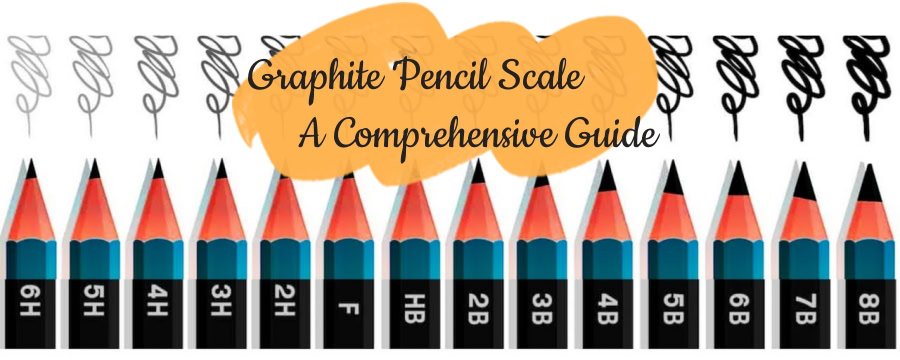


Understanding the graphite pencil scale is crucial for artists, designers, and anyone who uses pencils for precise work. The scale, which ranges from the most challenging H to the softest B grades, helps determine the pencil’s performance in line quality, shading, and durability.

This comprehensive guide will delve into the specifics of the HB system, show the characteristics of each grade, and provide practical tips for selecting the right pencil for your needs.
HB System VS Number System
The origins and differences between the HB and number systems for grading graphite pencils highlight their unique purposes and development. While both serve to classify pencil hardness, these systems emerged from different historical contexts and have distinct applications that cater to specific user needs.
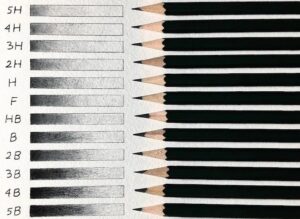
HB System: The HB system originated in Europe and is attributed to the early pencil-making techniques of the 18th and 19th centuries. Pencil manufacturers developed the “H” and “B” designations to indicate the hardness and blackness of the graphite core. The system evolved to include a range from 9H (hardest) to 9B (softest), with HB representing a balance between hardness and blackness. This graphite pencil scale became widely accepted in art and technical fields due to its precision and versatility.

Number System: The number system, primarily used in the United States, is also rooted in the 19th century. American pencil manufacturers adopted a more straightforward grading method using numbers 1 to 4 to denote the hardness of the graphite pencil scale. This system was designed for ease of use in educational and office settings, where a straightforward approach was preferred.
Geographical Preference: The HB graphite pencil scale system is predominantly used in Europe and other parts of the world, while the number system is more common in the United States. This geographical preference is mainly due to historical manufacturing practices and the specific needs of users in different regions.
HB Pencil System
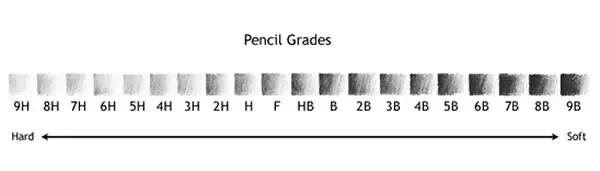
The HB graphite pencil scale system is a comprehensive grading scale that classifies graphite pencils based on their hardness and blackness. It uses a combination of letters and numbers to indicate a pencil’s hardness (H) and blackness (B). The scale typically ranges from 9H to 9B, with HB in the middle.
H (Hardness): Pencils with an H designation are harder and produce lighter, finer lines. The higher the number before the H (e.g., 9H), the more complex the pencil.
B (Blackness): Pencils with a B designation are softer and produce darker, bolder lines. The higher the number before the B (e.g., 9B), the smoother and darker the pencil.
HB: This grade represents a medium balance between hardness and blackness, making it a standard choice for general use.
Number Pencil System
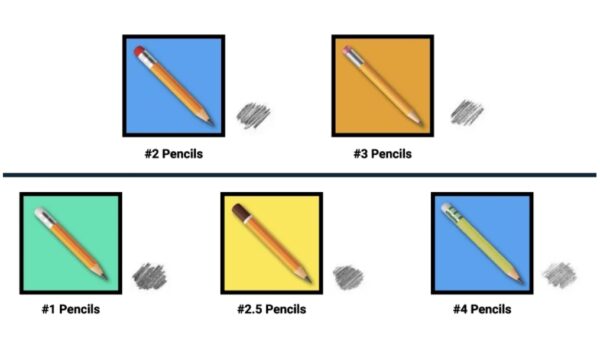
The number pencil system is a straightforward method used primarily in the United States to indicate the hardness of graphite pencils. It uses numbers to denote the hardness of the pencil, typically ranging from 1 to 4.
The number pencil system is simple and easy to understand, making it ideal for educational purposes. It provides a basic range of hardness levels suitable for writing, sketching, and light drawing tasks.
To learn more, read The Science Behind The Number 1 Pencil And Number 2 Pencil.
The use of HB system pencil
The comprehensive range of graphite pencil scales, from rugged to soft leads, allows for precise and varied applications, catering to the specific needs of different tasks. Here are some of the critical uses and advantages of HB system pencils:
Hard Pencils (H – 9H)
- Drafting and Technical Drawing: Hard pencils are ideal for precise lines and detailed work. Architects, engineers, and designers use these pencils for technical drawings and blueprints.
- Light Sketching: Artists may use H pencils for initial sketches or outlines where subtle lines are needed.
- Writing: H pencils can be used when a light, clean line is preferred.
Medium Pencils (F, H, HB)
- General Writing: HB pencils are the most common for everyday writing tasks. They balance dark and light lines well, making them suitable for note-taking and schoolwork.
- Initial Sketching and Shading: Artists often use HB and F pencils for initial sketches and light shading due to their balanced hardness and blackness.
Soft Pencils (B – 9B)
- Artistic Drawing and Shading: B pencils are favored by artists for creating rich, dark lines and deep shadows. The softer the pencil, the bolder and more expressive the lines.
- Blending and Smudging: Soft pencils blend and create smooth gradients. They are often used in portrait drawing and realistic artwork to achieve lifelike textures.
- Graphite Art: For those specializing in graphite artwork, a range of B pencils allows for various tones and depths, from light shadows to intense dark areas.
How to choose HB system pencil
Choosing the right HB system pencil can significantly enhance your drawing or writing experience. Various graphite pencil scales are available, each offering distinct qualities of hardness and blackness.
Honeyoung, as a pencil manufacturer, recommends considering the following factors and choosing the appropriate HB system pencil that best suits your writing, drawing, or technical work needs.
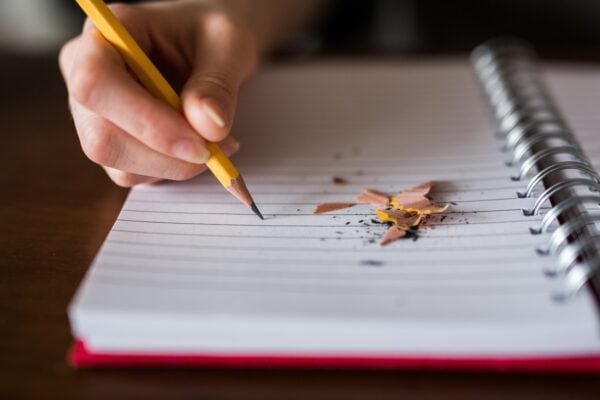
Purpose of Use:
- Technical Drawing: Choose H-grade pencils (e.g., 2H to 9H) for precise, light lines and detailed work. These pencils are ideal for architects, engineers, and designers.
- General Writing: HB or F pencils are suitable for everyday writing tasks, providing a balanced mix of hardness and blackness.
- Artistic Work: B-grade pencils (e.g., 2B to 9B) are preferred for drawing, shading, and creating dark, bold lines. They are ideal for artists who need a range of tones.
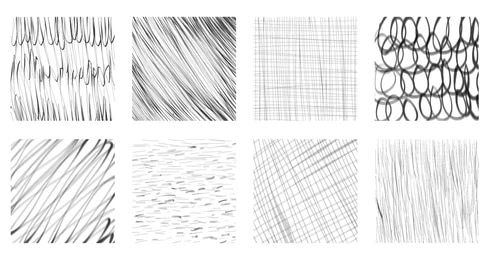
Desired Line Quality:
- Hard Pencils (H – 9H): Produce light, fine lines and are less prone to smudging. They are excellent for initial sketches, underdrawings, and detailed technical work.
- Medium Pencils (F, HB): Offer a balanced line quality that is neither hard nor soft, making them versatile for various uses, including writing and light shading.
- Soft Pencils (B – 9B): Produce dark, bold lines and are great for deep shading and blending. They are ideal for creating texture and depth in drawings.
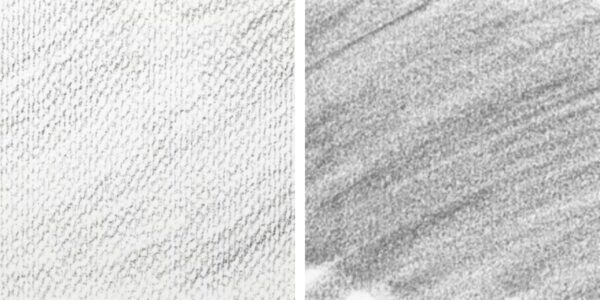
Surface Texture:
- Consider the type of paper or surface you will be working on. Rough or textured surfaces may benefit from softer pencils (B grades) for better adherence and darker lines, while smooth surfaces work well with harder pencils (H grades) for cleaner lines.

Personal Preference:
- Experiment with different graphite pencil scales to find the most comfortable and suitable for your style. Artists may prefer a range of grades to achieve various effects, while writers might stick to HB or F pencils for consistency.
- To know which pencil is correct, click here: A Comprehensive Guide: 9 Types of Pencils.
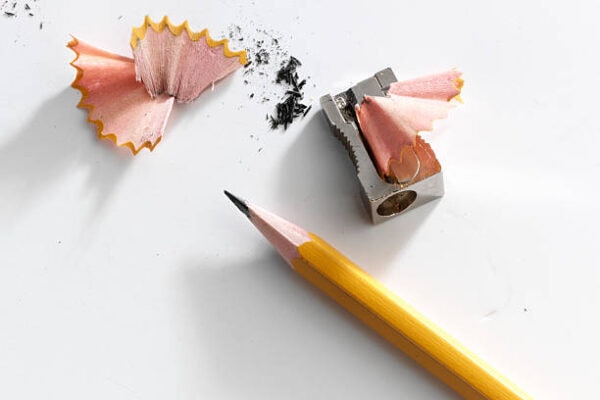
Durability and Maintenance:
- Hard pencils (H grades) tend to hold their point longer and require less frequent sharpening, making them ideal for detailed work.
- Soft pencils (B grades) may need more frequent sharpening but offer more decadent, darker lines.
FAQ
What is the difference between HB and 2B pencils?
An HB pencil has a balanced hardness and blackness, making it suitable for general writing and sketching, while a 2B pencil is softer and darker, ideal for shading and bold lines.
Do HB graphite pencil scale system pencils work well on all types of paper?
HB graphite pencil scale system pencils work well on most types of paper, but the choice of hardness may depend on the paper’s texture. Softer pencils (B grades) perform better on rougher paper, while harder pencils (H grades) are suitable for smoother paper.
How do I sharpen HB system pencils properly?
Use a quality sharpener that suits the pencil’s diameter. A manual sharpener is recommended for softer pencils (B grades) to avoid breaking the lead, while an electric sharpener works well for harder pencils (H grades).
How do I store my HB system pencils to keep them in good condition?
Store pencils in a cool, dry place, preferably in a pencil case or box, to protect them from damage. Keep the leads sharpened and avoid dropping them to prevent breakage.
Are there eco-friendly options for HB system pencils?
Many brands offer eco-friendly pencils made from sustainable wood and non-toxic materials. Look for pencils labeled as eco-friendly or certified by environmental organizations.
How do I clean smudges made by soft B-grade pencils?
Use a kneaded eraser to gently lift smudges from the paper without damaging it. A plastic eraser can also be effective for tougher smudges, and a clean brush can help remove eraser residue.



2 Responses
Do you know how to prevent pencil leads from breaking?
I learned a lot about graphite pencils. It would be great if there were more answers in the FAQ section.