


Introduction
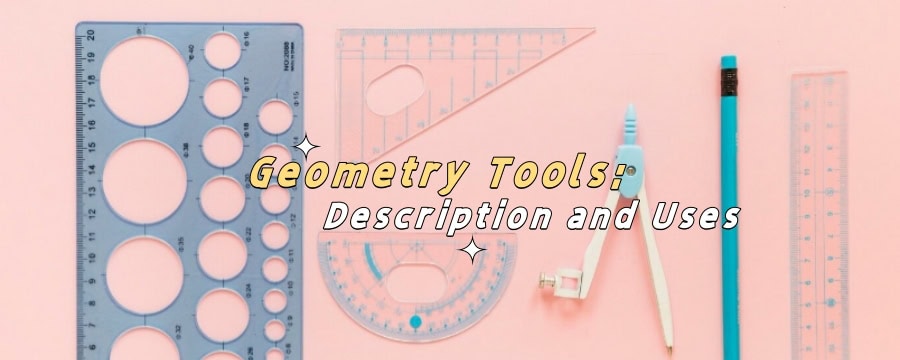
Geometry tools are essential for accurately drawing and measuring shapes, angles, and distances. These compass geometry tools help us understand geometric concepts such as angles, distances, areas, and volumes. Whether you are a student studying geometry, an artist working on technical drawings, or an engineering or architectural professional, the right tools in geometry can make your work more precise and efficient. In this article, we will explore various geometry tools and their practical uses.

Geometry Tools – descriptions
Tools in geometry have different structures, functions, and applications. Whether it is learning geometry or drawing architectural drawings, geometry drawers such as triangles, rulers, and compasses play an indispensable role. By understanding these geometry math tools, you can better master geometry.
Geometry Tools – Ruler
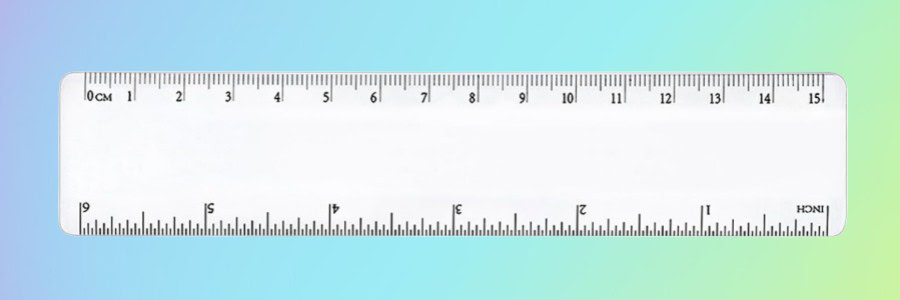
A ruler is one of the most commonly used tools for geometry. It is primarily used to measure length, draw straight lines, and various geometric shapes. Length is measured using a series of markings along the edge of the device. Rulers are usually made of wood, plastic, or metal and are marked with units of measurement such as inches, centimeters, millimeters, etc., allowing users to accurately measure distances.
Geometry Tools – Set Square (or Triangle)
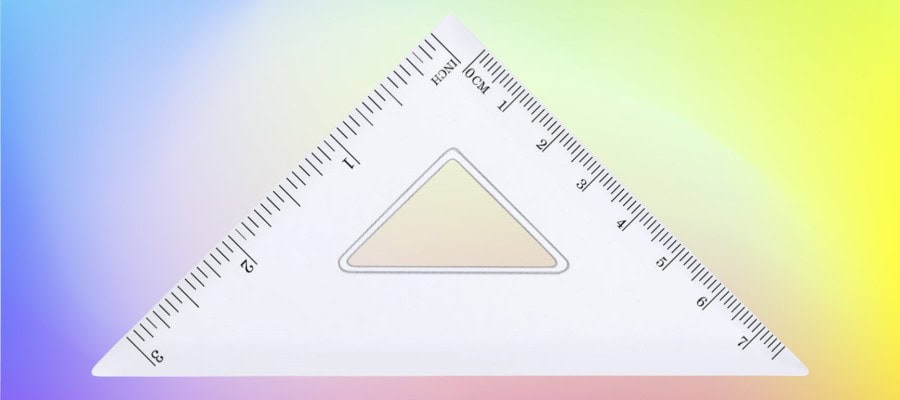
A set square, also known as a triangle, is a triangular tool used to draw precise angles and lines, ensuring accuracy in various constructions and drawings. There are two main types – 45°-45°-90° and 30°-60°-90° triangles – which are particularly suitable for drawing right angles, parallel lines, and specific geometric shapes. Set squares are usually made of transparent plastic for easy viewing, but in professional fields, metal set squares are also common. Simple and easy to use, set squares are an essential tool for students studying geometry and professionals working in engineering, architecture, and design.
Geometry Tools – Protractor
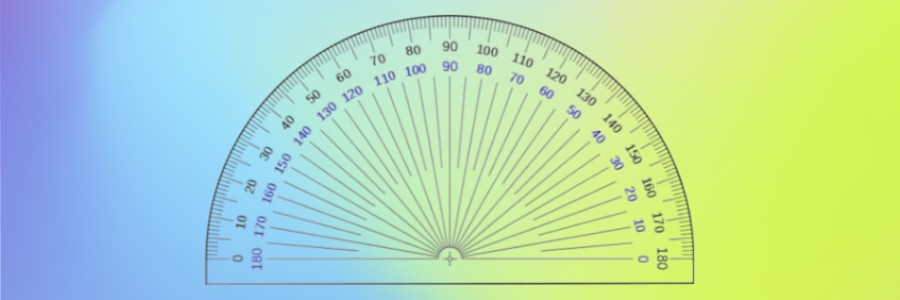
A protractor is a geometric tool for measuring angles. It is used to accurately measure and construct angles. Protractors are usually semicircular with a scale from 0° to 180°. Protractors usually have two scales, one clockwise and the other counterclockwise. You can choose the appropriate scale according to the type of angle you are measuring, and make sure the protractor’s baseline coincides with one side of the angle.
Geometry Tools – Compass
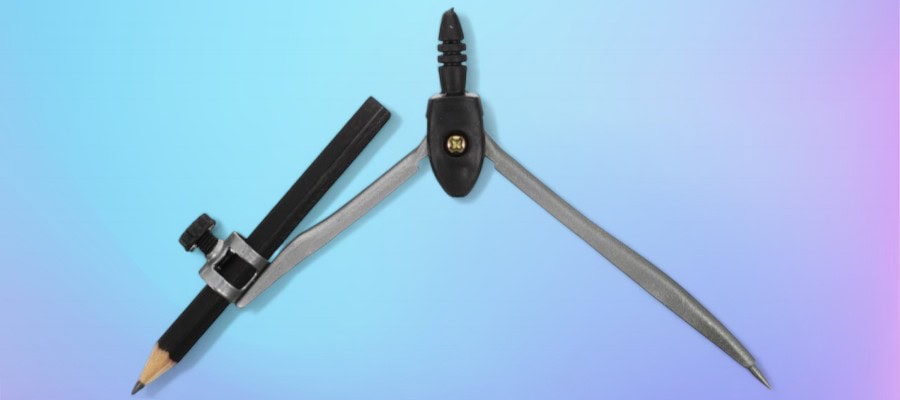
A compass is a drawing tool used to draw circles or arcs. It consists of two legs – one with a point at the end to hold the compass, and the other with a pencil or pen to draw the figure. The compass is adjustable and can be used to accurately draw circles and arcs of various radii by simply adjusting the width between the legs.
Geometry Tools – Divider
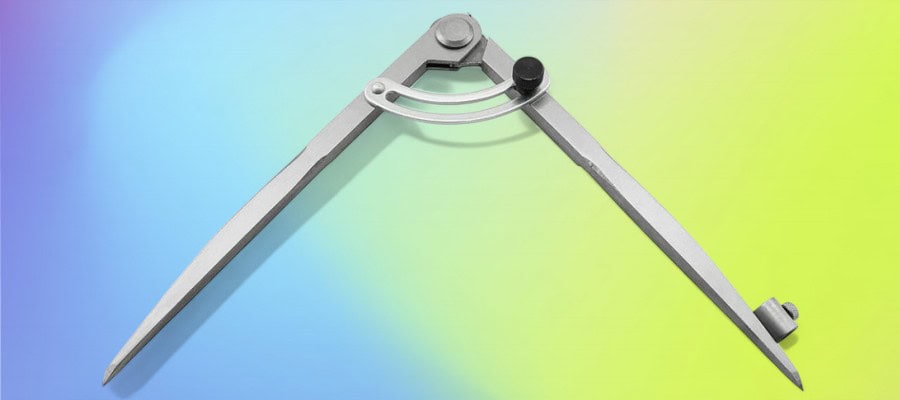
Similar in appearance to a compass, the divider, unlike a compass used to draw circles and arcs, focuses on measurement. A divider is used in geometry to divide line segments into equal parts, compare lengths, and repeat measurements. With two pointed feet with pointers at each end that can be adjusted to span the desired distance, the divider is also useful in fields such as engineering, drafting, and mapping, where precision is essential.
Geometry Tools – Geometric Templates
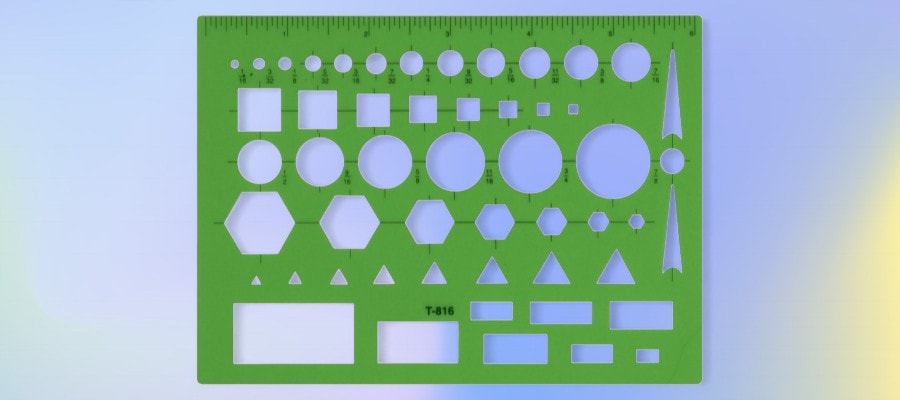
Geometric stencils are essential for creating precise shapes, lines, and patterns in geometry, technical drawing, and design. These stencils are usually made of durable plastic with pre-cut shapes such as circles, ovals, patterns, and triangles. They save time and ensure accuracy when creating geometric patterns. Align a pencil or pen with the edge of the stencil and you can replicate the drawing effortlessly without measuring.
Geometry Tools – Uses
Different geometry tools have different uses and functions. For example, a ruler is used to measure the length of a line segment and draw a straight line; a compass can draw a perfect circle and arc, and so on. Each compass geometry tool helps us learn and apply geometry in its specific way. Next, let’s explore the specific uses of each geometry tool.
Uses of Rulers

- Measure Length: Measure line segments accurately.
- Draw Straight Lines: Helps create precise straight lines.
- Construct Perpendicular Lines: Use a protractor to draw right angles.
- Divide Line Segments: Split a line into segments of different lengths.
- Draw Parallel Lines: Ensure parallelism of geometric shapes.
- Draw Angles: Helps construct specific angles with a protractor.
- Unit Conversions: Convert units like inches to centimeters.
Uses of Set Square (or Triangle)

- Draw Right Angles: Ensures exact 90° angles in construction.
- Create Parallel Lines: Helps draw parallel lines at specific angles.
- Measure Angles: Construct and measure common angles (e.g. 30°, 45°, 60°).
- Bisect Angles: Divides an angle into equal parts for accurate construction.
- Draw Perpendicular Lines: Use a ruler to draw perpendicular lines.
- Draw Triangles: Create isosceles triangles and equilateral triangles.
Uses of Protractors
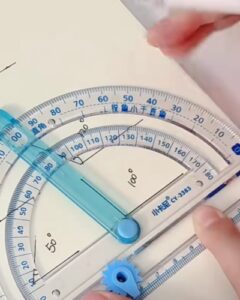
- Measuring Angles: Accurately measures angles in degrees.
- Drawing Specific Angles: Helps construct angles of any size, from 0° to 180°.
- Constructing Geometric Figures: Used to create polygons and other shapes with exact angles.
- Verifying Right Angles: Checks for 90° angles in constructions.
- Bisecting Angles: Assists in dividing angles into two equal parts.
Uses of Compass
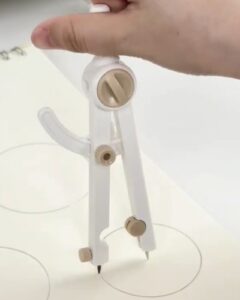
- Draw Circles: Create precise circles and arcs with fixed radii.
- Transfer Measurements: Copy the distance between two points.
- Construct Angle Bisectors: Divide line segments and angles into equal parts.
- Draw Perpendicular Lines: Helps construct perpendicular lines from points to lines.
- Construct Geometric Figures: Helps create equilateral triangles and regular hexagons by drawing sides of equal length.
Uses of Divider
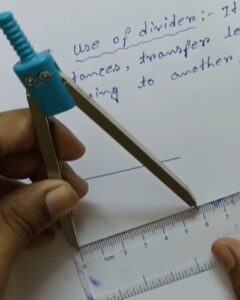
- Measure Distance: Transmits the exact distance between two points.
- Compare Lengths: Compare lengths on a chart or map.
- Divide Line Segments: Splits a line segment into equal parts.
- Mark Points: Marks a specific location on a line or curve.
- Construct Arcs: Helps create arcs or curves at regular intervals.
Uses of Geometric Templates

- Draw Shapes: Quickly create circles, triangles, squares, and other standard shapes.
- Build Patterns: Helps you design complex geometric patterns or layouts.
- Draw Curves: Includes templates for arcs, ellipses, and other curves.
- Create Technical Drawings: Essential for drawings and technical illustrations that require precision.
FAQ
What is the difference between a compass and a divider?
A compass is used primarily for drawing circles and arcs, while a divider is used for measuring and transferring distances between points. The divider has two pointed legs, whereas the compass has one pointed leg and one pencil/marker leg.
What are some tips for maintaining geometry tools?
- Rulers: Clean regularly to remove dirt and debris. Store them flat to avoid warping.
- Protractors and Set Squares: Keep them free of scratches by storing them in a protective case.
- Compasses and Dividers: Ensure the sharp points are not dulled. Tighten the adjustment screw for accurate usage.
Are the compasses suitable for intricate designs?
For complex patterns, the applicability of a compass depends on the specific content of the pattern. If the pattern contains a large number of circular or arc elements, a compass can play an important role in helping to draw accurate circular and arc parts. For example, when drawing some symmetrical geometric patterns, arc parts in mechanical drawings, etc., a compass can be of great help.
How do I use a protractor to measure an angle?
To measure an angle, place the center hole of the protractor at the angle’s vertex. Align one side of the angle with the zero line, and then read the measurement where the other side crosses the scale.
How to choose suitable geometry tools?
Choosing the right geometry tool depends on the specific task. For basic measurements, a ruler or protractor works well. To measure or construct angles, use a protractor or set square. For circles or arcs, a compass is ideal. If your work requires a high degree of precision, tools like protractors and compasses are essential.
You can explore the top 10 geometry sets for school, which can help you choose the best geometry tools for your needs.
What is the function of geometric templates?
Geometric templates are stencils that help draw consistent shapes like circles, ellipses, and polygons. They are beneficial for creating repetitive shapes and precise patterns in technical drawings.
Conclusion
From measuring angles and distances to constructing shapes and patterns, geometry tools such as rulers, protractors, compasses, set squares, and dividers provide the basis for effective geometry work. By understanding the description and use of each tool, you can choose the right tool for any task, whether it is a simple drawing or a complex technical design. With the right geometry tools, you can complete your tasks more efficiently.




2 Responses
During the architectural design process, every size and angle is related to the safety and aesthetics of the building.
Sí, puedo compartir este artículo directamente con los estudiantes para ayudarlos a entenderlo y usarlo mejor.